
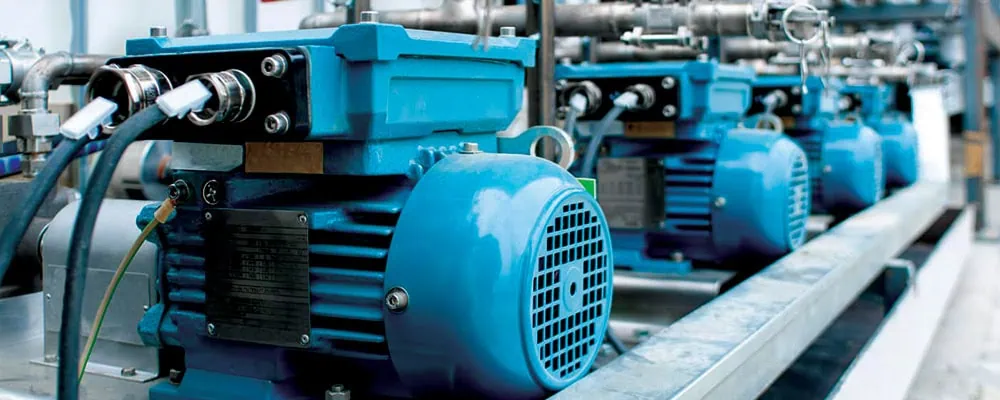
Application illustration; not evidence of a validated assembly or a customer installation.
Spring Design for Electric Motor Brush Mechanisms
A brush spring maintains contact force as a motor brush moves and wears. The spring is part of an electrical and mechanical assembly: brush material, holder geometry, commutator condition, vibration and operating temperature also affect performance. A spring alone does not establish the service life of the motor.
Define Force Across the Wear Travel
For a constant-force brush spring, specify the contact-force band and the travel associated with new and worn brush positions. Include the initial take-up region in the review. Measure force at agreed positions in the actual holder rather than relying only on a loose-spring result.
Installation and Material Review
Provide the brush-holder drawing, mounting details, strip routing, clearance and maximum travel. Check that the strip cannot rub against unintended surfaces or interfere with moving parts. Discuss operating temperature, moisture and corrosion exposure before choosing the spring material and surface condition.
Prototype Verification
Compare extension and return measurements to identify friction and hysteresis. Evaluate force after repeated movement and representative environmental exposure. Define inspection limits, the measurement fixture and failure criteria before approving samples. Contact resistance and motor operation require separate checks at assembly level.
Discuss a Custom Brush Spring
Leading Spring manufactures strip spring families including constant-force and power springs. Provide your force target, wear travel, mounting drawing, operating environment and expected quantity for an application review. Explore constant force spring design or request a design review. Product capability and acceptance limits should be confirmed for the proposed drawing.