
A hose reel can have two different parked states: one with a tool connected and another with the coupling alone. Disconnecting the tool changes the moving mass, end geometry and possible return behavior. A park test performed only with the tool fitted is incomplete if normal use permits its removal.
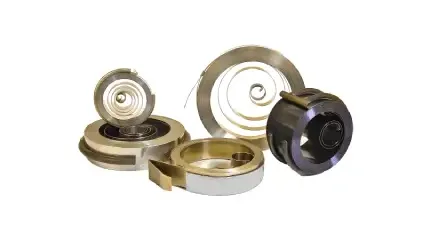
Define the end condition
Identify the hose-end coupling, any protective boot and the part that contacts the parking support. State whether the support is intended to retain the tool, the coupling or a dedicated stop feature. Do not use the coupling's sealing surfaces as an assumed impact stop.
Follow the hose supplier's depressurization and disconnection procedure. Spring retraction does not establish that a line is safe to disconnect or that its pressure has been released.
Compare the permitted configurations
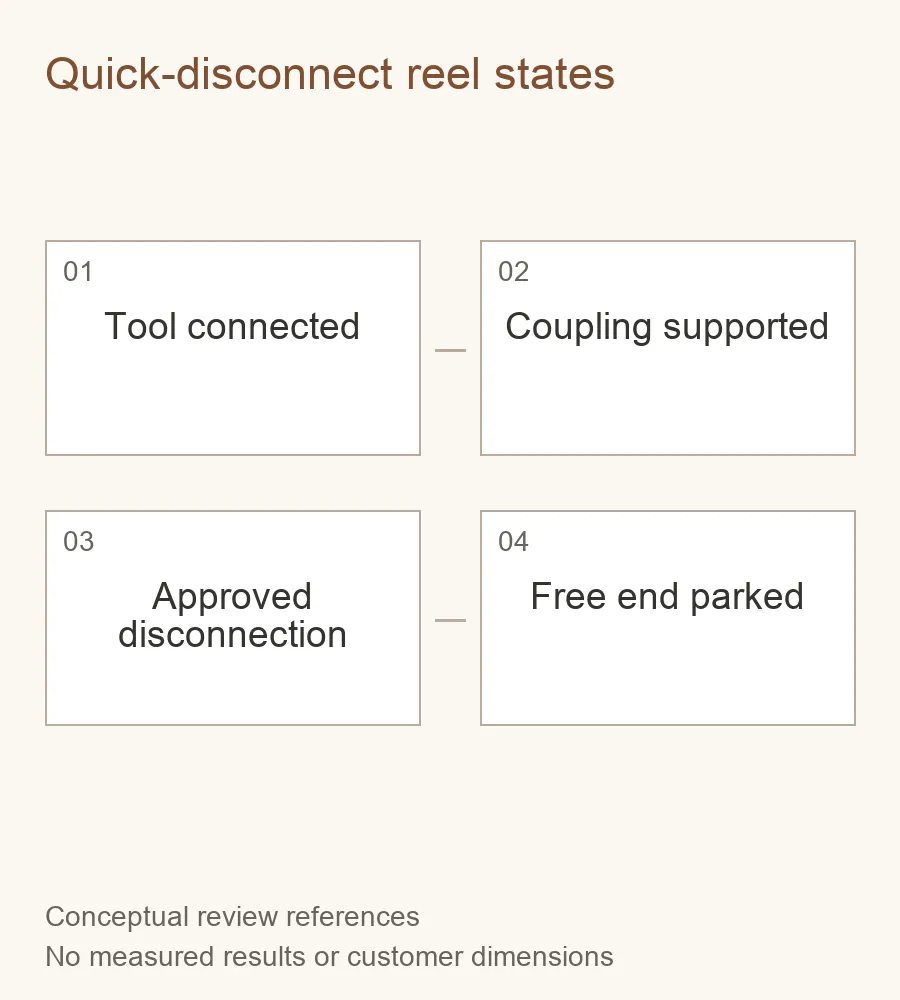
Review return behavior and end seating with each approved end configuration. A lighter free end may arrive differently, while a larger replacement coupling may catch at an opening. Record those changes alongside the spring and reel identity.
Check whether the operator needs to retain or dock the end during the transition. The design should define that function rather than relying on a user to catch a released coupling.
Accept the parked condition by identifying what is retained, where it is supported and how it is accessed again. The spring's ability to rewind the hose is only one part of that handover.
For the broader background, read Cable Retraction Lock Release Behavior.
Explore related spring information or discuss this mechanism with a non-confidential description.