
A fixture can return to its home position while its clamp is not engaged. The spring's motion and the clamp's holding function need separate evidence, particularly when a robot uses a position signal to decide whether the next step may begin.
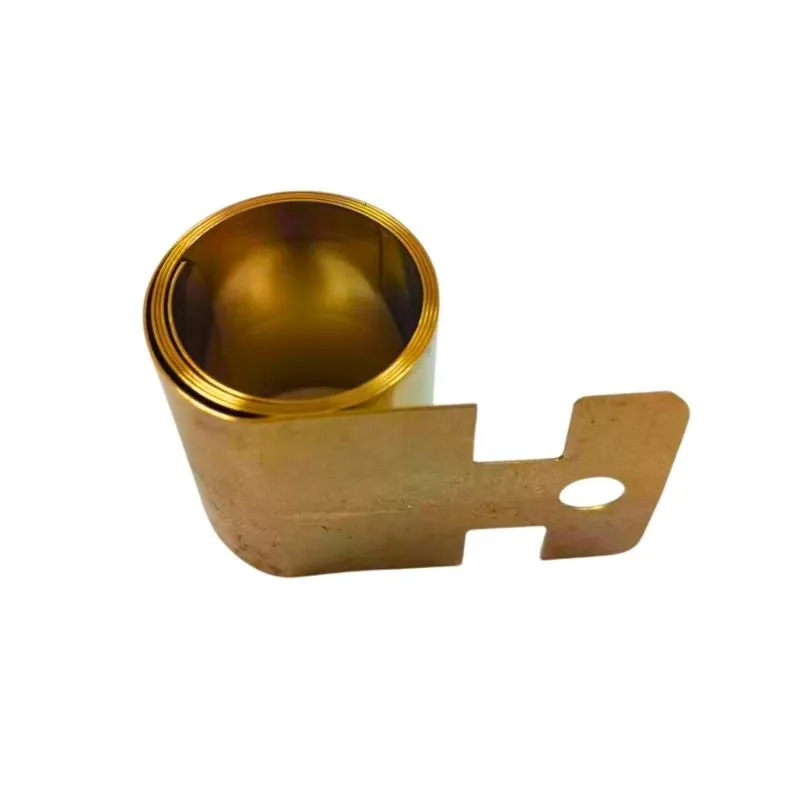
Describe the sequence by function
Identify part location, clamp engagement, spring return and the signals used to observe them. State which physical feature each signal actually detects. A sensor on a returned actuator may not confirm that a clamp face has reached its accepted engagement.
Include the permitted part-present and part-absent states. A fixture that moves correctly without a part may contact or locate differently when loaded.
Keep confirmation tied to the intended feature
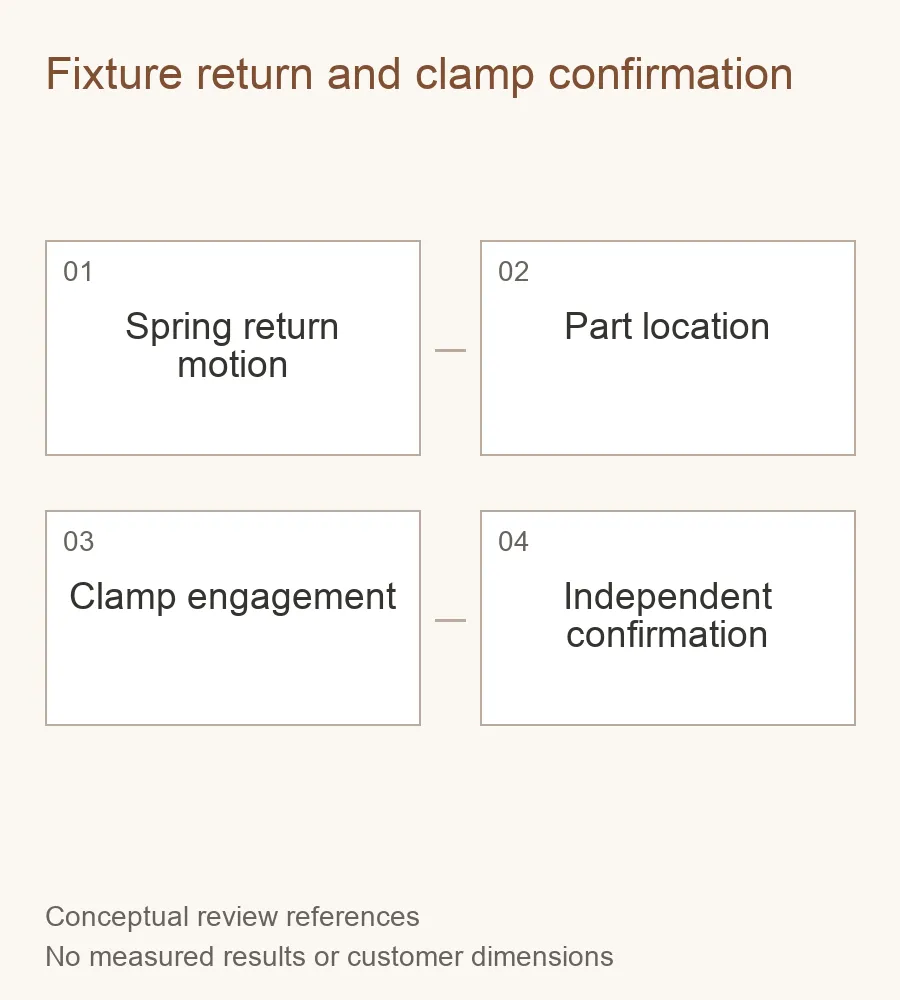
During an approved evaluation, compare signals with the physical states they are intended to represent. Record any interval during which return is complete but holding is not established. Do not shorten that interval in documentation by assigning both functions the same label.
A spring revision can change timing without changing the clamp geometry. Recheck the interaction rather than assuming that a faster return automatically improves the sequence.
The fixture designer remains responsible for the control and holding requirements. The spring enquiry should specify return travel, load and timing context without describing a component return as proof that a robot fixture is safe or ready for operation.
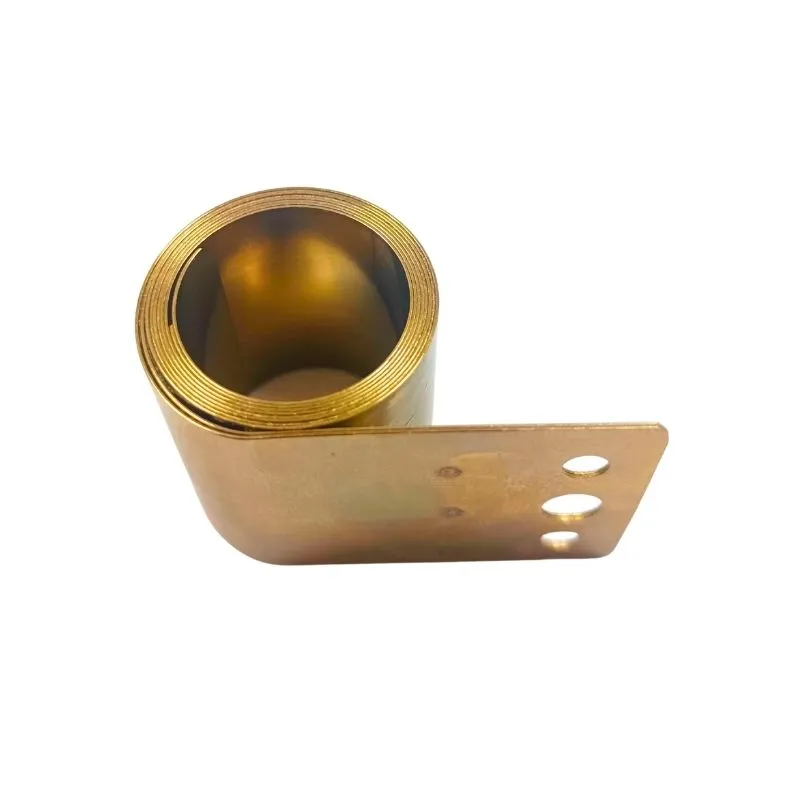
For the broader background, read Constant Torque Spring Integration with a Latch.
Explore related spring information or discuss this mechanism with a non-confidential description.