
A braided cable jacket can interact with an exit differently from a smooth jacket. A local snag may appear only at certain pull directions or after the cable surface changes. More return torque can conceal the hesitation while increasing contact loading.
Record the contact, not just the stall
Identify the location and orientation of the cable when it catches. Inspect the exit component, its edge condition and any joint or seam near the path. A mark on the braid is evidence of contact, not proof of which part initiated the problem.
Keep the actual production cable in the review. Substituting a smooth test cord can remove the surface interaction being investigated.
Compare the permitted pull directions
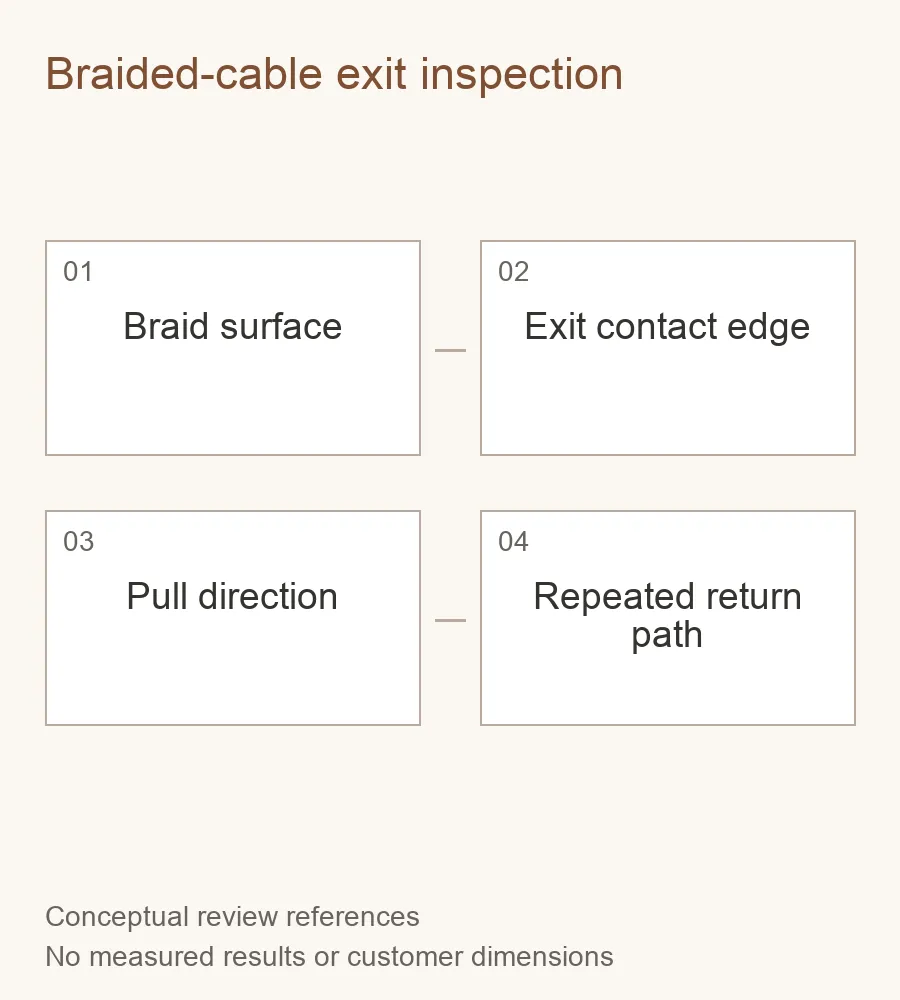
Use the approved movement envelope and safe test setup. Observe whether the braid approaches an edge differently during pull and return. Include the parked transition, where the cable may lose tension or change angle.
Any proposed exit revision needs to preserve cable bending and guidance requirements. Polishing, replacing or enlarging an opening without controlled geometry can introduce another variable and make the comparison inconclusive.
The final record should identify cable construction, exit revision and the contact positions examined. Accept both movement and cable condition against the intended duty. A reel that completes its return while repeatedly abrading the braid has not answered the durability question.
For the broader background, read Spring Strip Surface Scratches and Defect Location.
Explore related spring information or discuss this mechanism with a non-confidential description.