
When one supplier provides a spring module and another provides the mechanism, the gap between their drawings can become the real design problem. An interface control sheet records the decisions that neither component drawing should leave implicit.
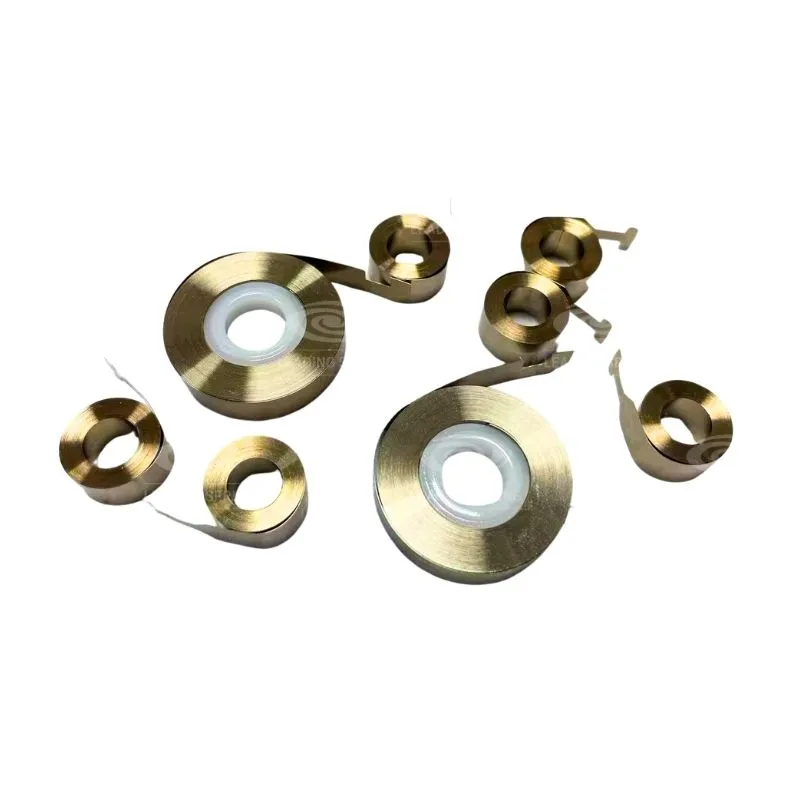
Keep the sheet focused
Useful entries are the mating datums, direction conventions, available movement, attachment geometry and the force or torque quantity defined at the shared interface. Identify the drawing and revision that control each entry.
Name the owner of unresolved inputs. A blank travel limit or support reaction should remain visibly open rather than being filled with a convenient assumption by either supplier.
Connect change and verification
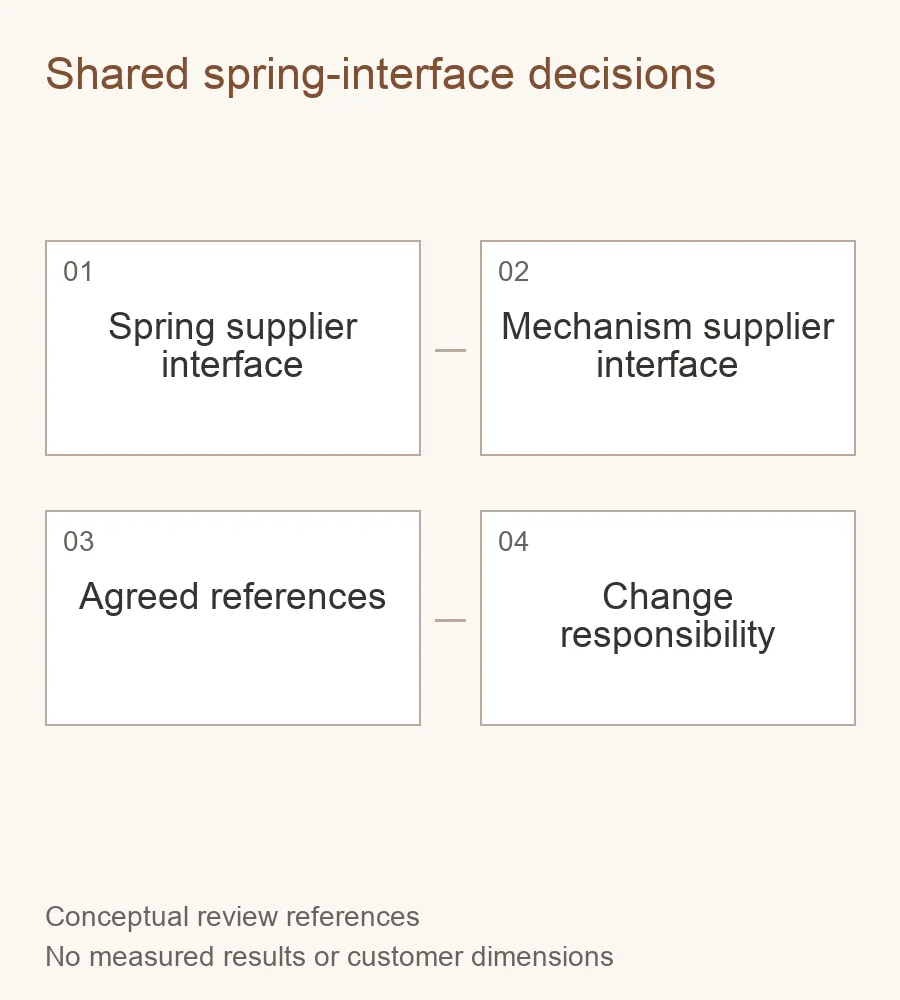
Record which changes require a joint review: moved attachment, revised cable route, different coupling, altered preload or another modification that changes the shared relationship. Do not rely on an unchanged spring part number to prove that the interface is unchanged.
Define the evidence used to close each functional question and where it is measured. Spring output, mounting suitability and complete-system behavior can require different records even when they share a test assembly.
A concise, controlled sheet makes collaboration easier because each team can use the same references without receiving unnecessary confidential detail. Its purpose is to prevent missing decisions, not to replace the component drawings or imply that the entire mechanism has already been accepted.
For the broader background, read Spring Digital Drawing Revision Control.
Explore related spring information or discuss this mechanism with a non-confidential description.