
A returned control and an accepted electrical contact state are different observations. The spring can bring a button, slider or lever toward a stop while the contact mechanism changes state at another point in the movement.
Establish the event order
Identify mechanical start, contact transition, accepted travel and final stop using one position reference. State what the user is meant to feel and what the electrical system is meant to detect. A tactile change does not automatically identify the electrical transition.
Keep the actual contact component and its operating requirements in the assembly definition. A mechanical spring note does not establish its electrical load capability or contact performance.
Compare the return path too
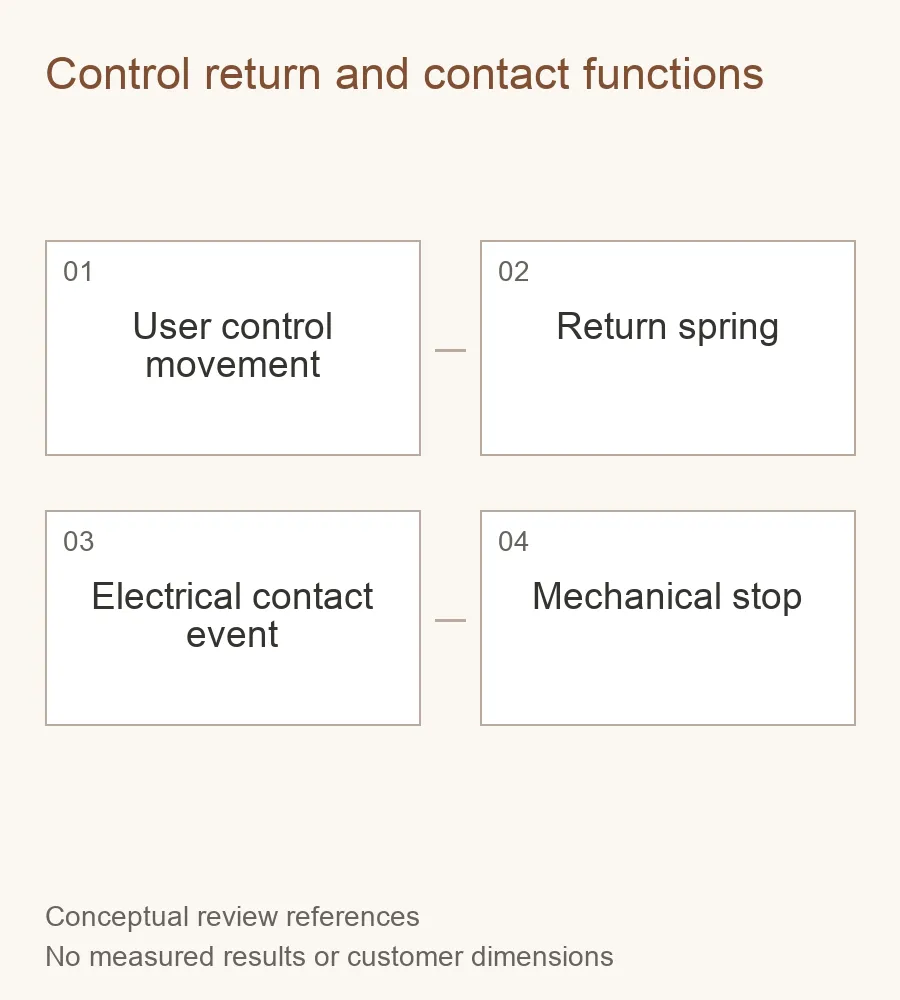
A contact may change state at a different position during release than during actuation. Record both directions rather than assuming symmetry from the visible control travel.
If spring contribution changes, reassess the movement and the contact interaction. Greater return force can alter effort or arrival without correcting a mismatched contact position.
The useful acceptance record separates operating feel, mechanical travel and the required electrical states. Each can then be discussed with the appropriate supplier instead of treating successful control return as proof that every contact requirement has been met.
For the broader background, read Spring Acceptance Tests at Functional Positions.
Explore related spring information or discuss this mechanism with a non-confidential description.