
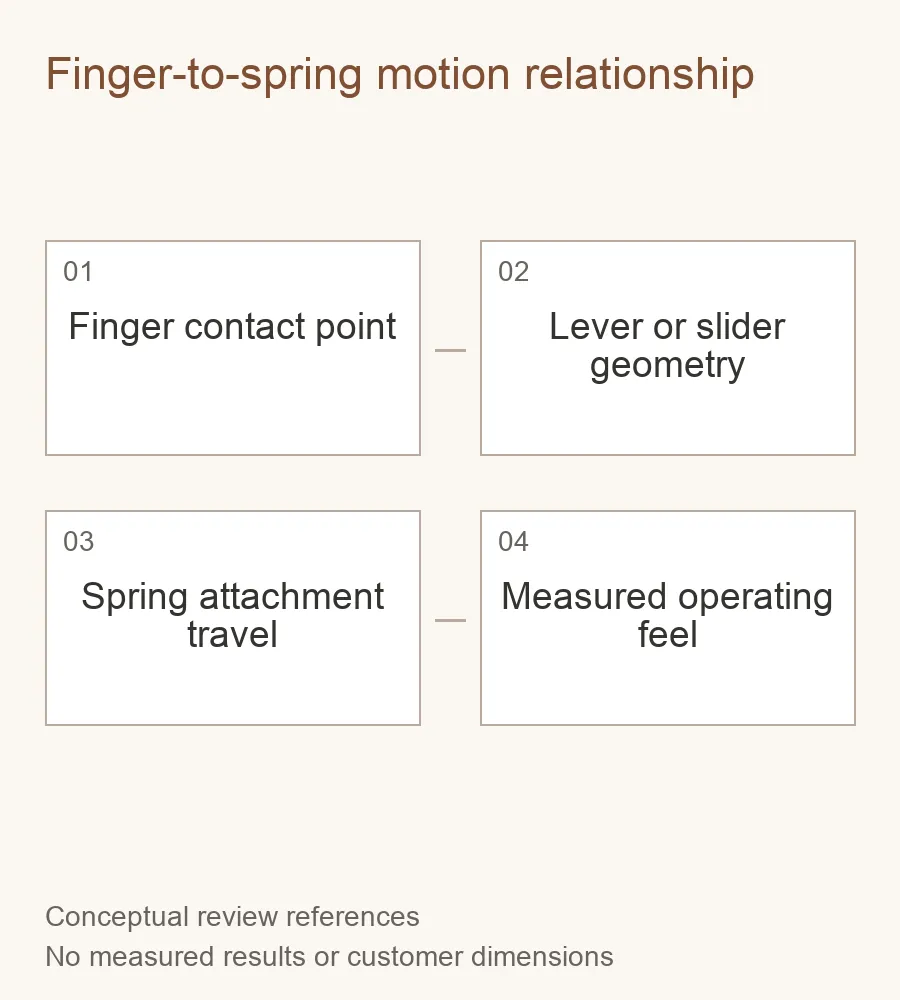
The stiffness or force measured at a spring attachment is not necessarily what a user feels at a control. A lever, slider or linkage transforms the relationship between finger movement and spring movement.
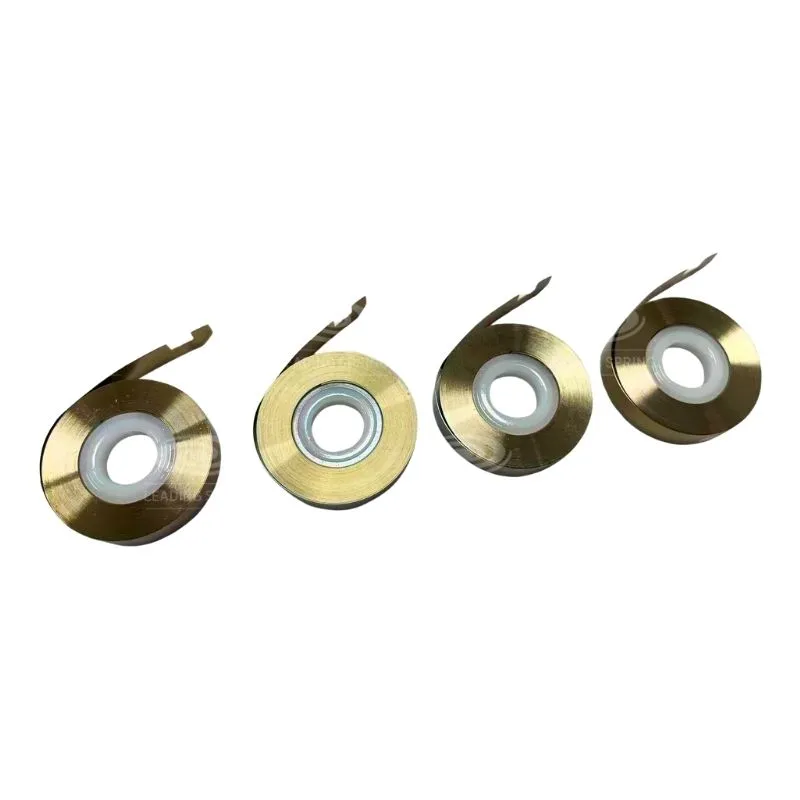
Put the two movements side by side
Identify the intended finger contact point and direction of use. At several control positions, record the corresponding spring attachment location. This reveals whether the movement ratio changes through the stroke.
A small movement at the spring can correspond to a larger movement at the finger, or the reverse. Comparing force values without their locations can therefore lead to the wrong spring change.
Keep other contributions visible
Friction, contact detents and stops affect the complete interaction. A measured tactile change should be tied to the feature and position where it occurs rather than assigned automatically to spring rate.
Use a defined measurement method at the actual operating point. Moving the force gauge to a more accessible point can change the result unless the geometry relationship is accounted for.
For an enquiry, provide the desired interaction at the finger and the available attachment geometry. The supplier can then discuss a component contribution in the correct reference frame. A single spring force quoted without its displacement relationship cannot establish the feel of the assembled control.
For the broader background, read Variable Force Spring Local Gradient and User Feel.
Explore related spring information or discuss this mechanism with a non-confidential description.