
Illustrative application image. This image is not evidence of a customer installation or a validated spring assembly.
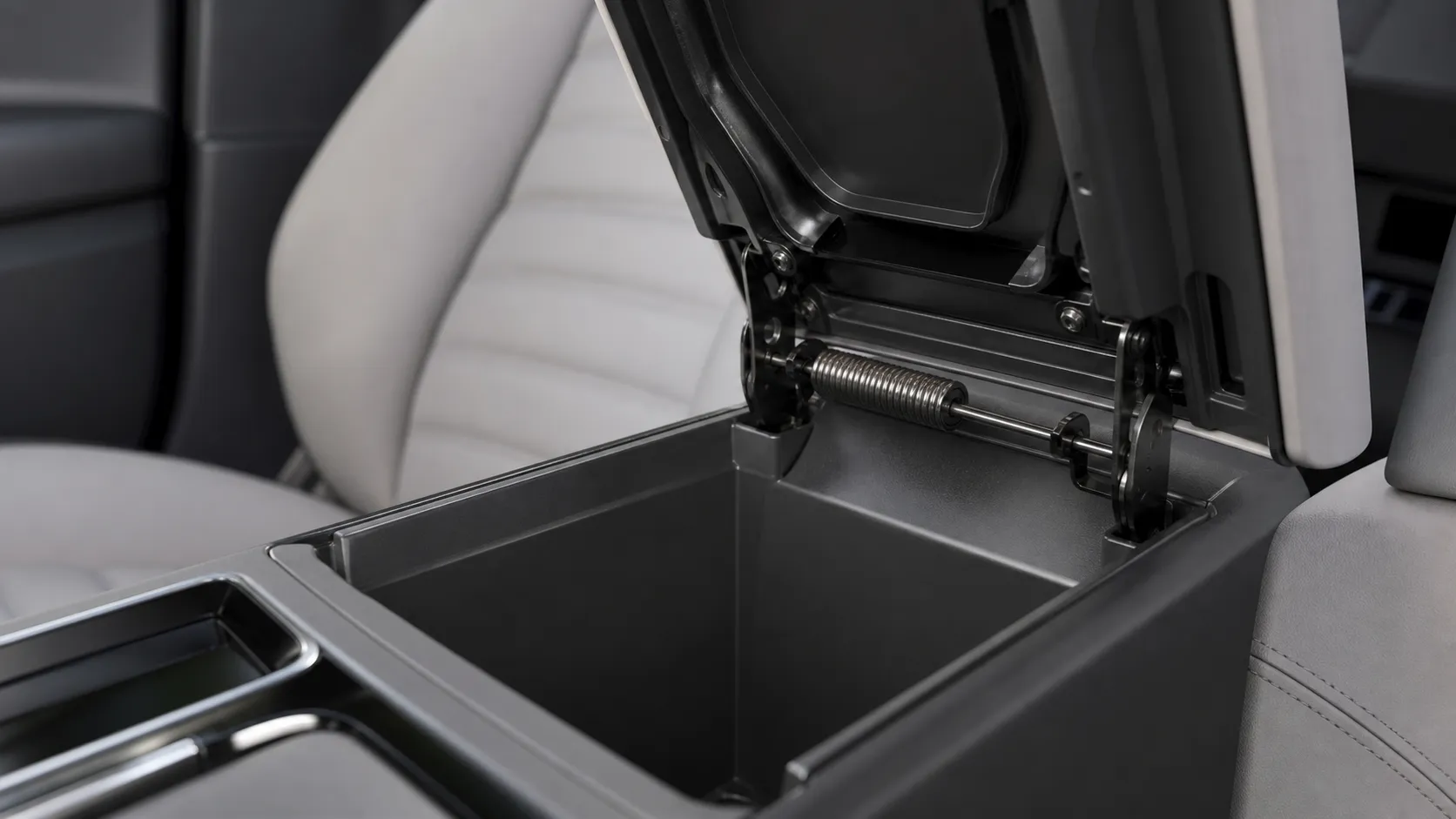
Constant torque springs can support automotive interior storage compartments by providing controlled opening, stable rotary movement, and improved user feel. They are useful for console lids, covers, small doors, and compact interior mechanisms.
Automotive interiors require repeatable movement, low noise, and stable performance over time. A custom spring can help balance torque and improve the perceived quality of the compartment mechanism.
Quick answer: why use constant torque springs in automotive interiors?
They provide controlled rotary torque across the working angle, helping lids and covers open or close smoothly without sudden movement.
Application examples
- Center console lids
- Storage compartment covers
- Small interior doors
- Cup holder covers
- Foldable interior accessories
Design inputs
| Input | Design role |
|---|---|
| Lid weight | Defines torque support requirement. |
| Opening angle | Controls working range. |
| Hinge space | Limits spring size and installation layout. |
| Noise requirement | Important for interior quality. |
| Temperature range | Automotive parts must handle environmental changes. |
Testing recommendations
Test opening speed, closing feel, noise, vibration, temperature performance, cycle life, and assembly tolerance. The spring should be tested with the final hinge, damper, latch, and cover structure.
FAQ
Can constant torque springs be used in car console lids?
Yes. They can support controlled rotary motion and improve opening feel in compact hinge mechanisms.
What affects automotive spring performance?
Temperature, vibration, material, torque level, hinge friction, and assembly tolerance can affect performance.
Can springs be customized for automotive interiors?
Yes. Springs can be customized according to torque, angle, size, material, and cycle life requirements.