
A telescopic column does not always lift the same moving mass throughout its stroke. One stage may travel first, followed by a second stage carrying additional structure. A spring that makes the first interval comfortable can provide insufficient assistance after the next stage joins the movement.

Locate the stage change
Prepare a short motion sequence showing which members move during each interval. Include the payload, sliding members, cables and accessories that actually follow the motion. Do not count the complete column as moving mass if part of it remains attached to the base.
At each transition, record whether a cable, stop or transfer feature starts carrying a different member. That change can alter required assistance even when the payload itself has not changed. A force reading plotted only against total column height can conceal the reason for the step.
Choose assistance around the intervals
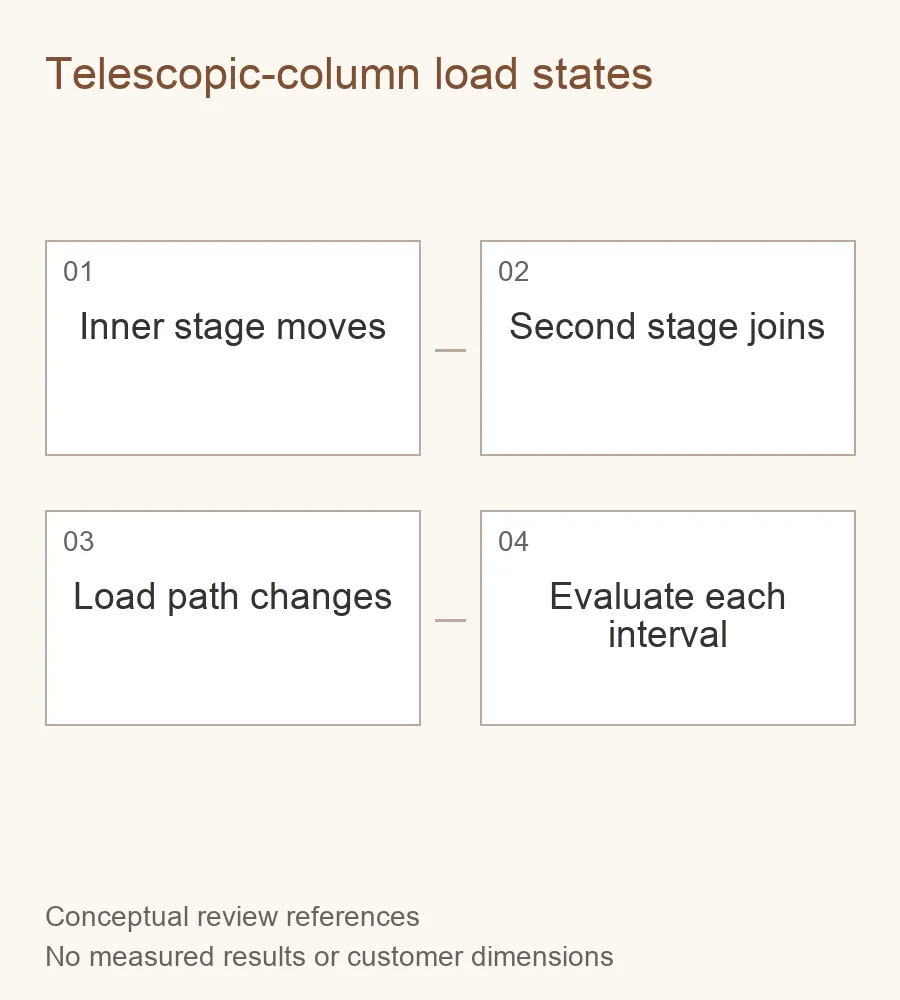
Compare the required effort before, through and after the transition. A near-constant spring pull is one possible contribution, not an automatic match to a staged requirement. A variable profile or different transmission may merit discussion if the mechanism needs substantially different assistance between intervals.
Avoid smoothing the transition out of a target curve before understanding it. Some steps come from the intended sequence; others come from friction or a transfer feature engaging abruptly. Those call for different changes.
The prototype record should identify which stage is moving at every measurement position. Check the reverse sequence as well: the stage that extends first may not be the first to retract. The evidence needed for approval is an acceptable operating effort and controlled movement through the handover, not simply a balanced column at maximum height.
For the broader background, read Variable Force Spring Design Changes After Load Growth.
Explore related spring information or discuss this mechanism with a non-confidential description.