
A removable shipping lock may hold a spring-assisted carriage away from its normal operating position. Removing the lock can then expose a load imbalance that was invisible during transport. The important question is which component carries the load immediately before and immediately after removal.

Record the restrained configuration
Identify the shipping-lock location, the carriage position and the spring's installed state. State whether the lock carries spring load, payload load or both. A label saying remove before use is not a description of those forces.
Keep installation changes in the sequence. A payload, service cable or bracket may be fitted after the product leaves its packaging. Removing the lock before those steps can create a different load case from removing it afterward.
Make the handover explicit
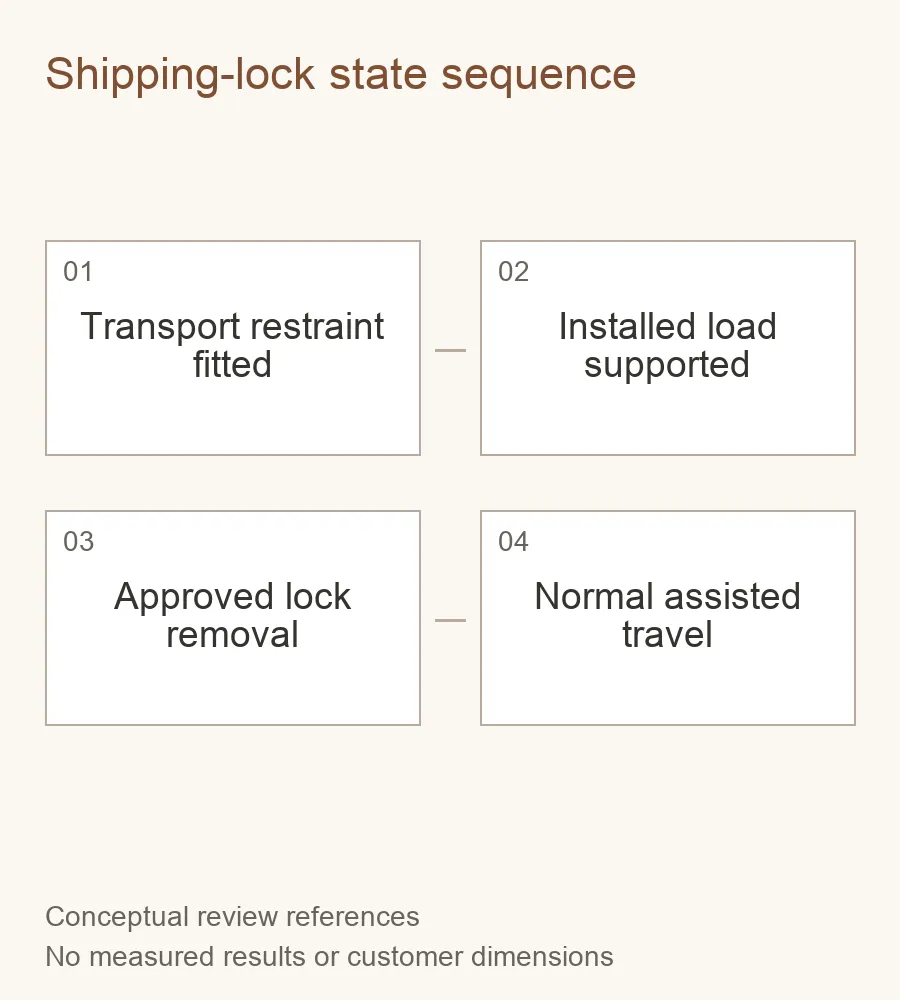
The product designer should define how the load is supported while the transport restraint is removed. Do not use an improvised release to discover whether the spring is balanced. Any required tool, support or guarding belongs in the approved installation method.
Review clearance after removal. A partially retained pin, tether or lock bracket must not enter the moving spring path. If the restraint is intended to be refitted for transport, its engagement position and load support need the same clarity.
A useful acceptance record includes the shipping state, installed state and the transition between them. Preserve those references with the assembly revision. A spring can meet its operating requirement while the shipping-lock sequence remains unresolved; the two approvals should not be collapsed into one.
For the broader background, read Spring Tracking Changes After Transport.
Explore related spring information or discuss this mechanism with a non-confidential description.