
Illustrative application image. This image is not evidence of a customer installation or a validated spring assembly.
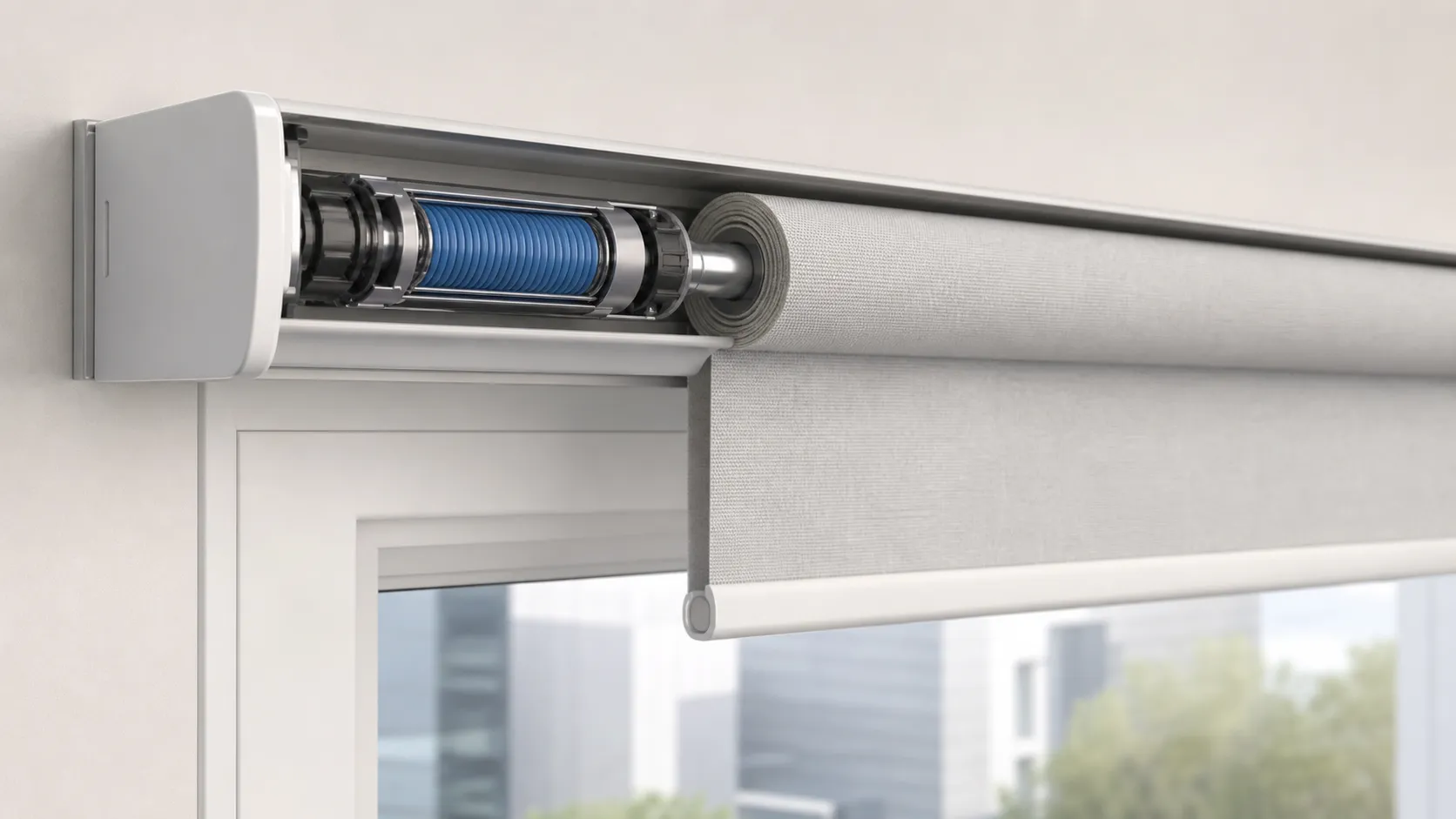
Power springs can be used in curtain, blind, and shade return mechanisms to store rotational energy and provide controlled rewind torque. They are useful for compact roller systems where the fabric or cord needs smooth return movement.
In many retractable shade products, a power spring works with a shaft, housing, and locking structure. The spring stores energy when the curtain or blind is extended and releases torque during return.
Quick answer: what does a power spring do in a blind mechanism?
It provides rotary torque for controlled return or winding. The goal is to retract the blind smoothly without excessive pull force or sudden snap-back.
Common applications
- Roller blinds
- Compact shade systems
- Retractable curtain modules
- Automotive or RV window shades
- Small rotary return devices
Design inputs
| Input | Impact |
|---|---|
| Roller diameter | Defines torque and winding behavior. |
| Fabric or cord load | Changes required spring force. |
| Working turns | Determines extension and return range. |
| Housing size | Limits spring diameter and strip width. |
| Return speed | Must be controlled for safety and user feel. |
Why controlled torque is important
If torque is too weak, the blind may not return completely. If torque is too high, the blind may retract too quickly or create noise and impact at the stop. Good spring design balances torque, friction, roller diameter, and locking function.
Testing recommendations
Test the spring inside the complete blind assembly. Check pull force, return speed, noise, friction, locking reliability, end-stop impact, and repeated cycling. For sun-exposed or outdoor systems, material and corrosion resistance should also be reviewed.
FAQ
Are power springs suitable for roller blinds?
Yes. They are commonly used in compact rotary return systems, including rollers and retractable products.
Can return torque be customized?
Yes. Torque can be adjusted by spring size, material, thickness, width, and working turns.
What should be tested before production?
Pull force, return speed, noise, cycle life, housing fit, and safety stop behavior should be tested.