
A grommet mounted in a sliding panel introduces two movements: the panel carries the opening, while the cable can move through it. Measuring only the free cable end can combine those movements and obscure the reel's actual payout.

Label the moving opening
Record the panel position and the cable displacement relative to the grommet. Show the route on both sides at the panel's permitted positions. A fixed exit assumption is no longer adequate.
Check whether the cable changes direction at the opening as the panel moves. The grommet's material, retention and intended cable compatibility belong in the installation definition, not as an unspecified soft edge.
Review combined positions
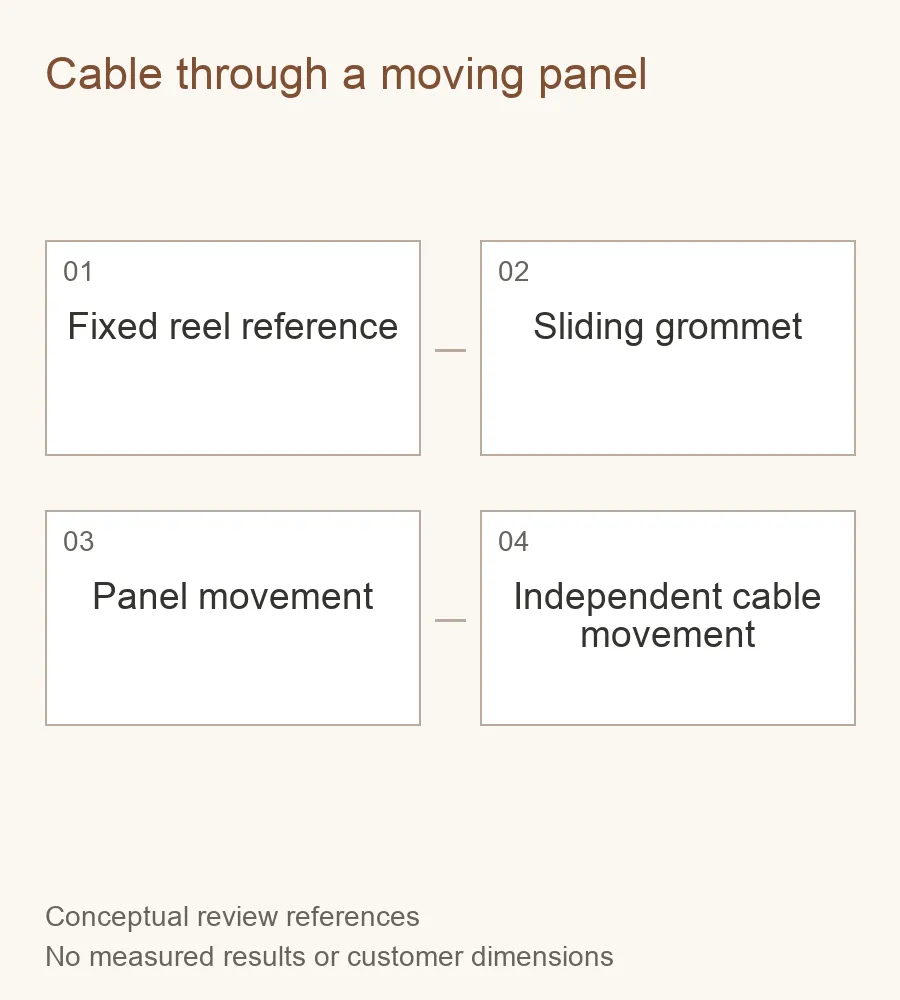
List the permitted combinations of panel travel and cable extension. The most demanding contact can occur in an intermediate combination rather than at either overall endpoint. Keep that combination in the prototype record.
Cable drag at the grommet can influence both panel effort and reel return. Compare these functions separately before adjusting the spring. A spring change can make the cable move while increasing the load applied to the panel.
A useful enquiry includes two coordinate references: panel-to-frame and cable-to-panel. With those defined, the spring reviewer can discuss payout and return contribution without mistaking panel movement for cable movement through a stationary exit.
For the broader background, read Spring Return Failure After Cable Re-routing.
Explore related spring information or discuss this mechanism with a non-confidential description.