
Illustrative application image. This image is not evidence of a customer installation or a validated spring assembly.
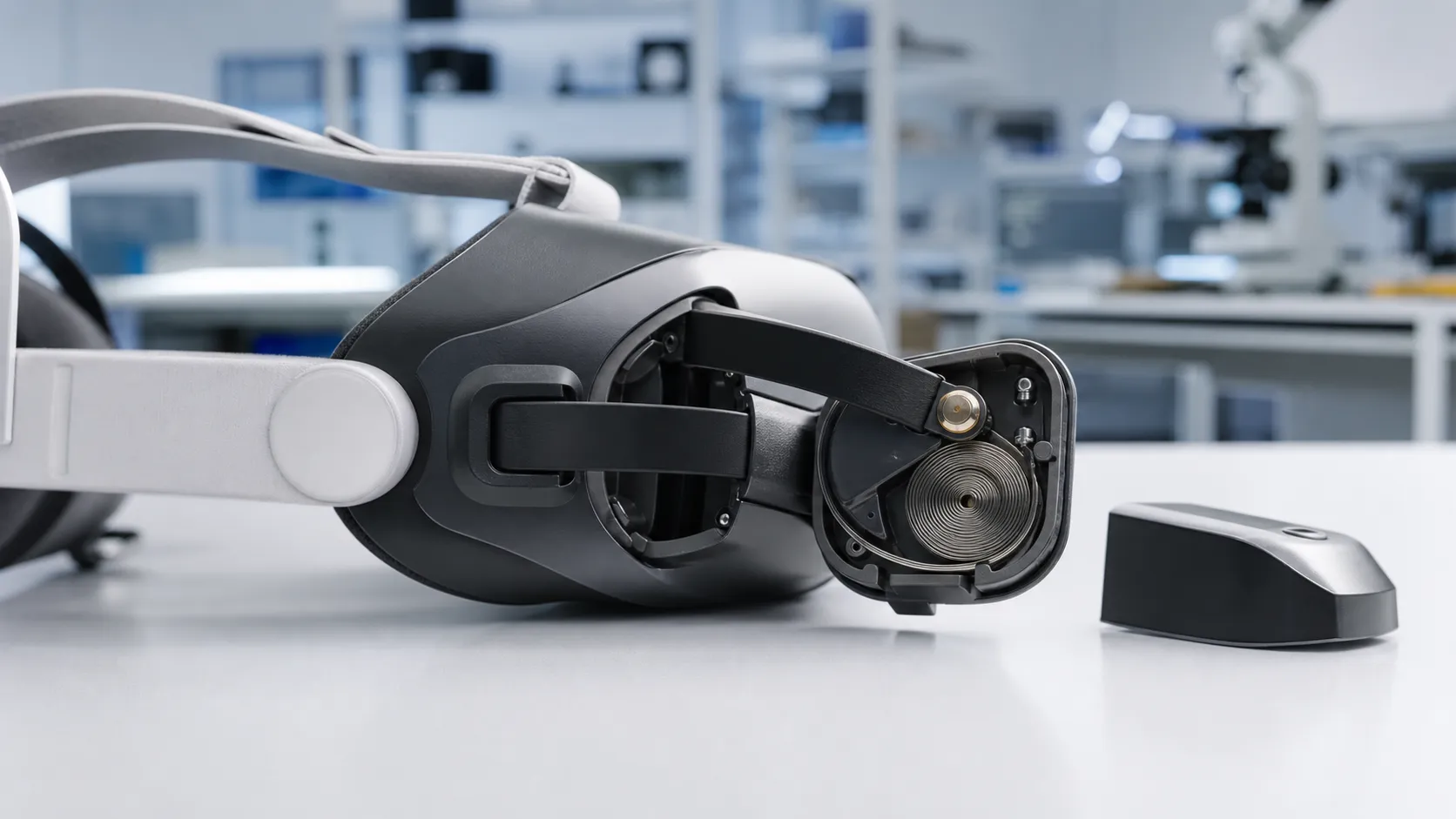
Cable springs can support VR headsets and wearable devices by helping retract, guide, or manage cables in compact electronic products. They are useful when a cable needs controlled return movement without taking up much internal space.
Wearable electronics often require lightweight, compact, and reliable movement. A custom cable spring can help manage charging cables, signal cables, adjustment modules, and small retractable structures inside or near the product housing.
Quick answer: why use cable springs in wearable devices?
Use a cable spring when the device needs controlled cable extension and return in limited space. The spring helps reduce cable mess, improve user experience, and support repeatable movement.
Possible applications
- VR headset cable accessories
- Wearable display cable routing
- Compact charging cable modules
- Sensor cable management
- Retractable wearable electronics accessories
Design parameters
| Parameter | Why it matters |
|---|---|
| Cable length | Determines spring travel and storage structure. |
| Cable diameter | Affects bending radius and housing size. |
| Return force | Controls how smoothly the cable retracts. |
| Housing space | Limits spring size and cable path. |
| Cycle life | Important for repeated user operation. |
Reliability considerations
Wearable products may be exposed to movement, vibration, sweat, dust, and repeated handling. The cable path should avoid sharp bending, unstable winding, and excessive return force. Material selection and surface treatment should also be reviewed for the final environment.
Custom development
Shenzhen Leading Spring can help develop custom cable spring mechanisms for wearable electronics, VR accessories, charging modules, and compact cable management systems. Contact Shenzhen Leading Spring with drawings or samples.
FAQ
Can cable springs be used in compact electronics?
Yes. They can be customized for small housing spaces, cable lengths, and return force requirements.
What causes cable spring failure?
Poor cable routing, excessive bending, high return force, friction, weak housing design, and insufficient cycle testing can cause problems.
What information is needed for design?
Cable length, diameter, target return force, available space, cycle life, and working environment are useful inputs.