
An axial spring assist can reduce the load on a screw drive, but it can also change the tendency of the load to drive the screw. Whether the handle moves by itself depends on the complete transmission. A spring force value alone cannot establish a stable parked state.
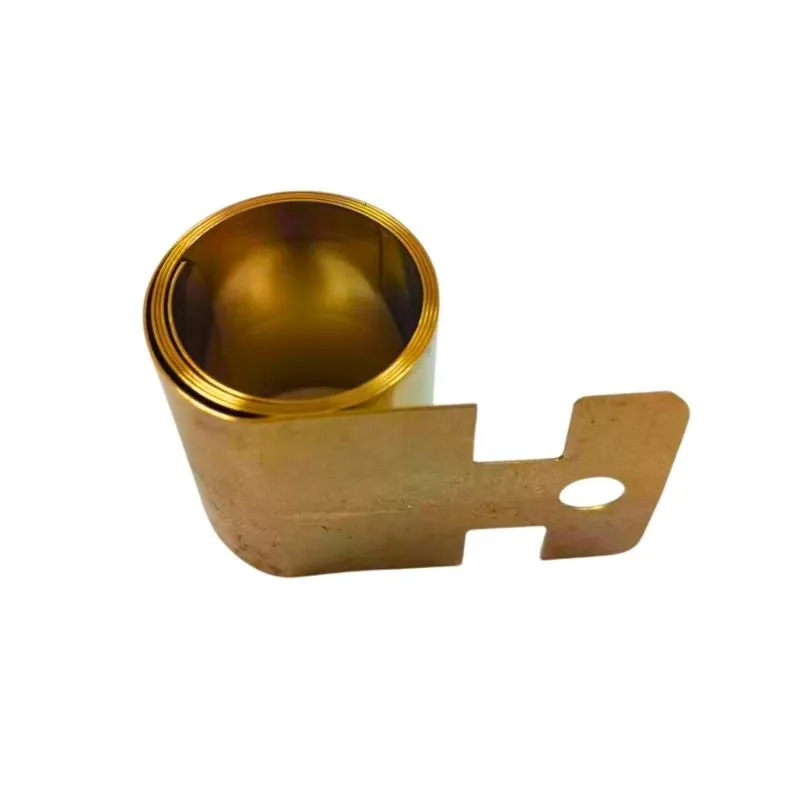
Identify the screw, not just its lead
Record the screw type, lead, support arrangement and any brake or holding feature. A ball screw and a sliding screw should not be assumed to have the same efficiency or backdriving behavior. Use the selected drive manufacturer's data rather than assigning a generic self-locking label.
Show where the assist acts. If it lifts the same carriage as the screw, it changes the axial load transmitted through the nut. If it acts through a linkage, the relationship may change with position. The handle torque then depends on that relationship and the drive's losses in the relevant direction.
Separate effort from retention
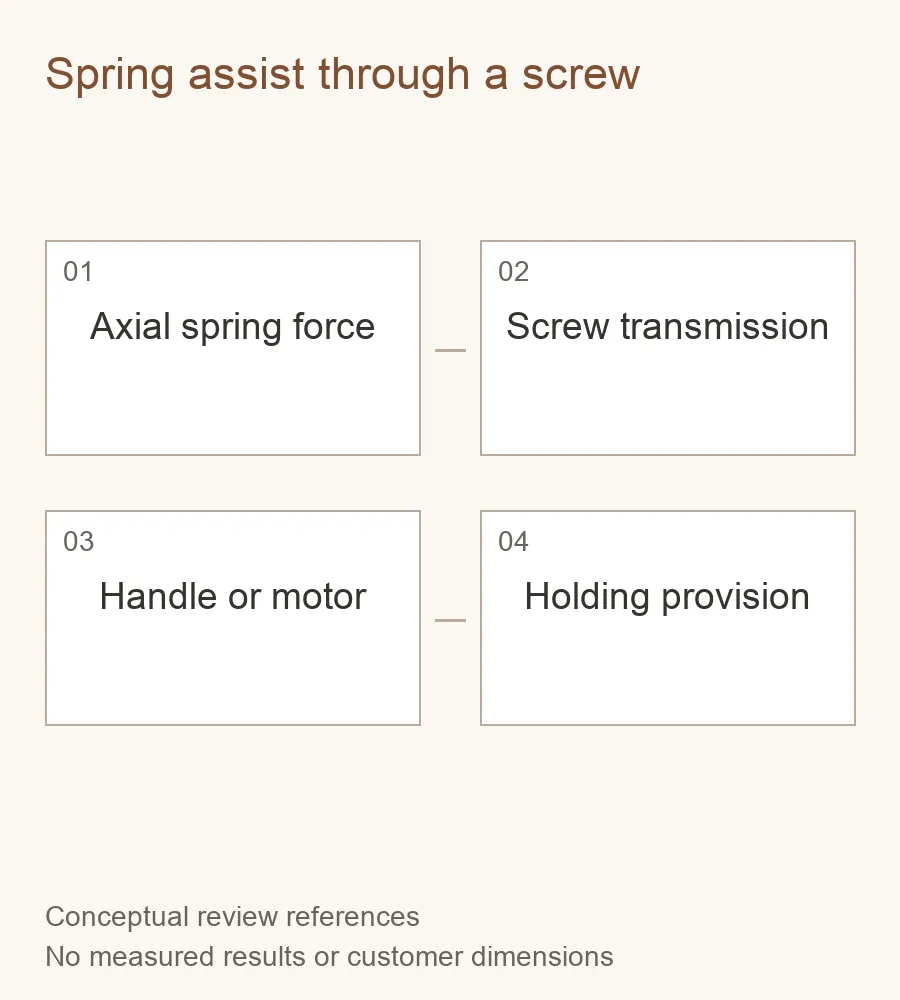
Write two requirements: the effort needed to move the carriage and the means that retains it when the operator lets go. Check the lightest permitted load as well as the heaviest. An assist selected only around the heavy case may create an upward driving tendency when the fixture is empty.
Assess the power-off condition if a motor is fitted. Motor holding torque while energized is not evidence of retention after power loss. Any brake release or manual adjustment needs the machine's approved procedure and load support.
A useful review package contains a load-path sketch, the screw identification, the assist attachment and the intended parked states. This lets the spring and drive suppliers discuss the same mechanism without either one implicitly accepting the other's holding function.

For the broader background, read Constant Force Springs for Counterbalance and Lift Assist Applications.
Explore related spring information or discuss this mechanism with a non-confidential description.
Background reference: THK ball screw design context. Component documentation does not qualify the complete mechanism.