
A one-way clutch can transmit motion in one relative direction and overrun in the other. In a spring return, this makes the relative direction between the clutch members more important than a clockwise arrow drawn on the outside of the housing.
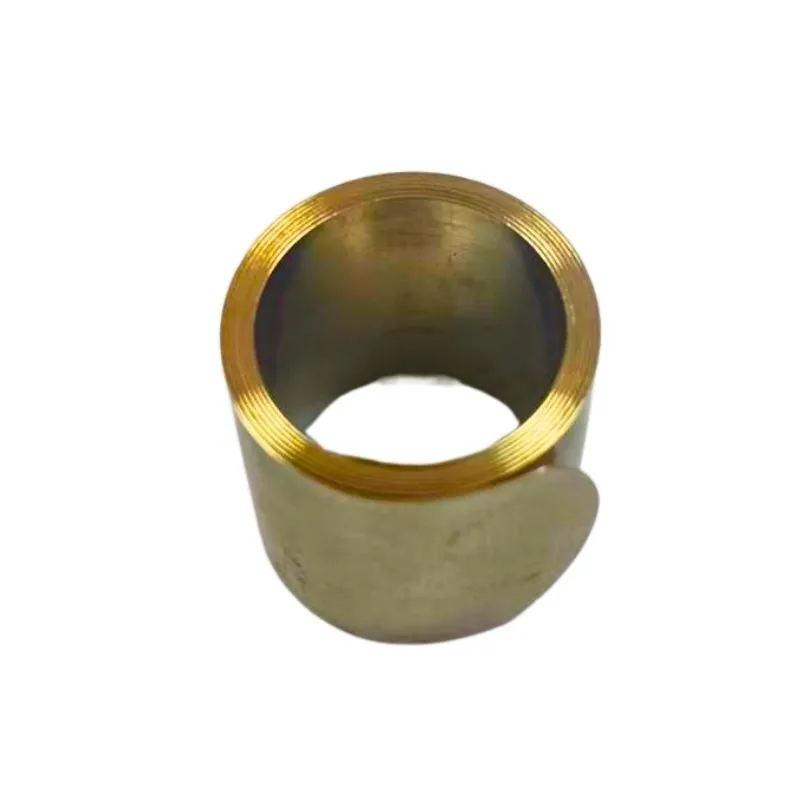
Name the members and the viewpoint
Label input, output and housing. State the viewing side for every rotation arrow. Then describe the user-driven movement and the spring-driven return separately. A clutch that engages during winding may need a different arrangement from one intended to transmit the return.
Prepare a small state table: which member moves, which is restrained, and whether the clutch should transmit or overrun. Include any powered reset or service movement that the product actually permits.
Check engagement before assigning spring torque
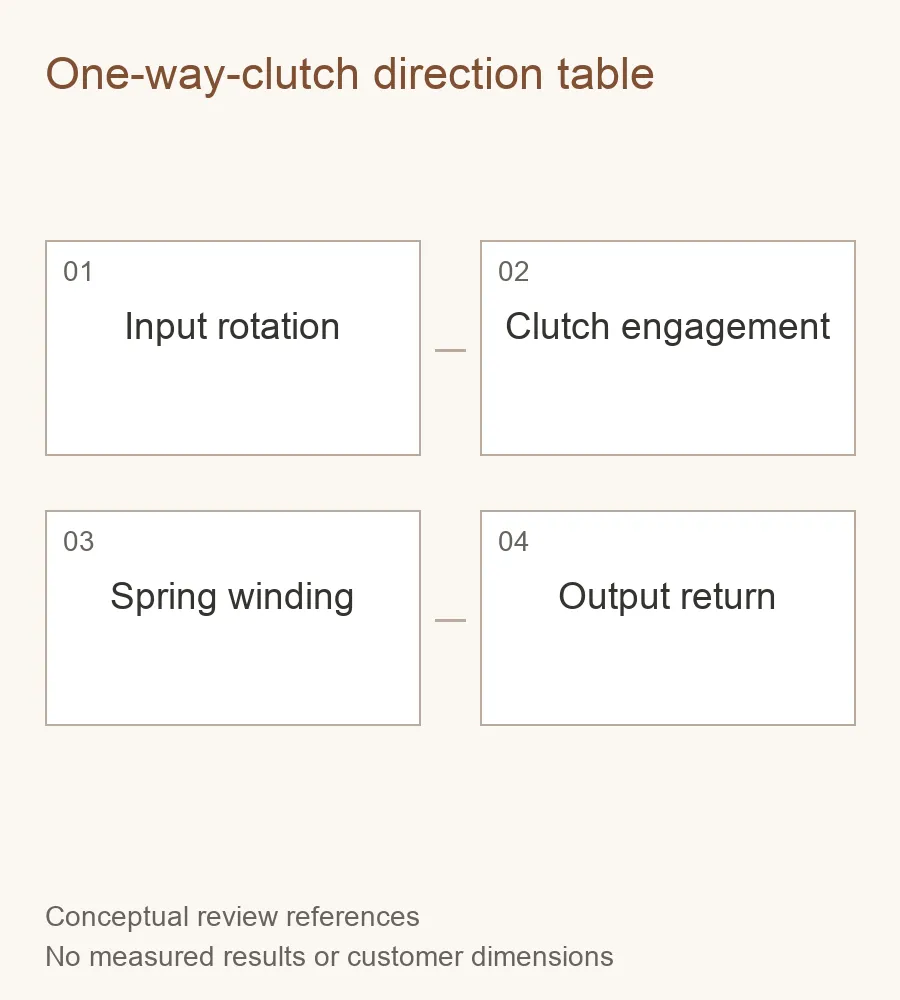
Lost motion or an unexpected overrun can make the output appear to have no spring force. Increasing the spring does not correct a clutch that is operating in the wrong relative direction. Verify the selected clutch's operating information and the assembled orientation.
The engaged torque path and the overrunning drag are separate inputs. Drag can still affect a low-output return even when the clutch is not supposed to transmit useful torque. Neither behavior should be inferred from the spring drawing.
Keep the direction table with the assembly identification. It provides a clearer supplier discussion than calling a clutch simply right-hand or left-hand without identifying the two members. The final assembly needs its own review; a catalogue description of clutch operation does not confirm that a particular spring-clutch combination is suitable.
For the broader background, read Power Spring Assembly Without Reverse Winding.
Explore related spring information or discuss this mechanism with a non-confidential description.
Background reference: Reell clutch product functions. Component documentation does not qualify the complete mechanism.