
A control that returns reliably on a level bench may behave differently when the product is tilted. Gravity changes its direction relative to the moving part, while the spring and guides remain fixed within the product.
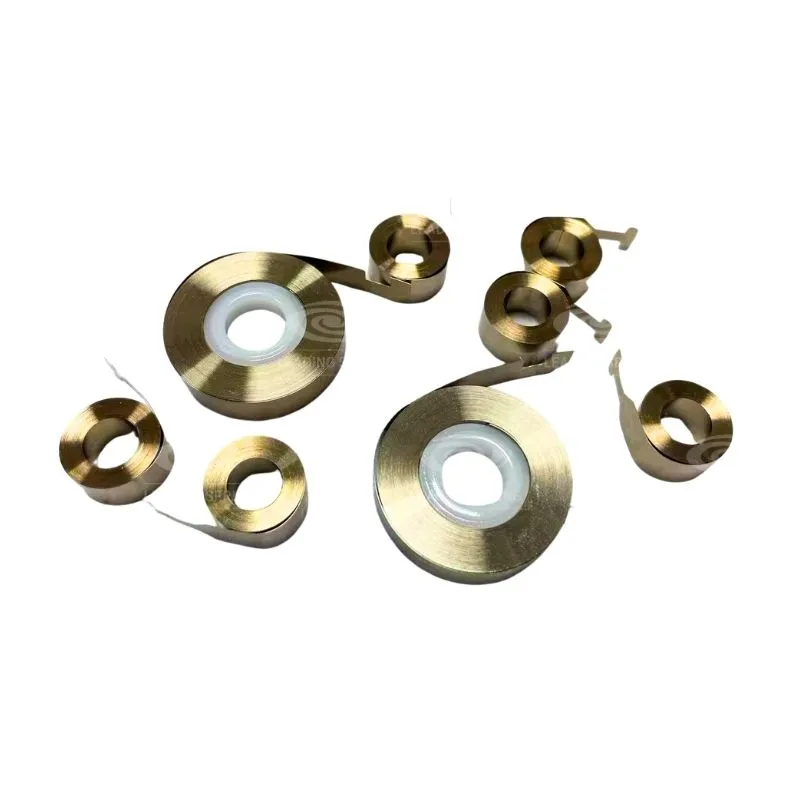
Define the intended orientations
List the orientations the product is designed to use, including any adjustable stand or handheld position. Avoid using an unbounded phrase such as works at any angle unless the design requirements actually support it.
Identify which moving mass contributes to the control. A small knob, cable loop or cover can matter when the spring output and friction are low.
Compare the same control positions
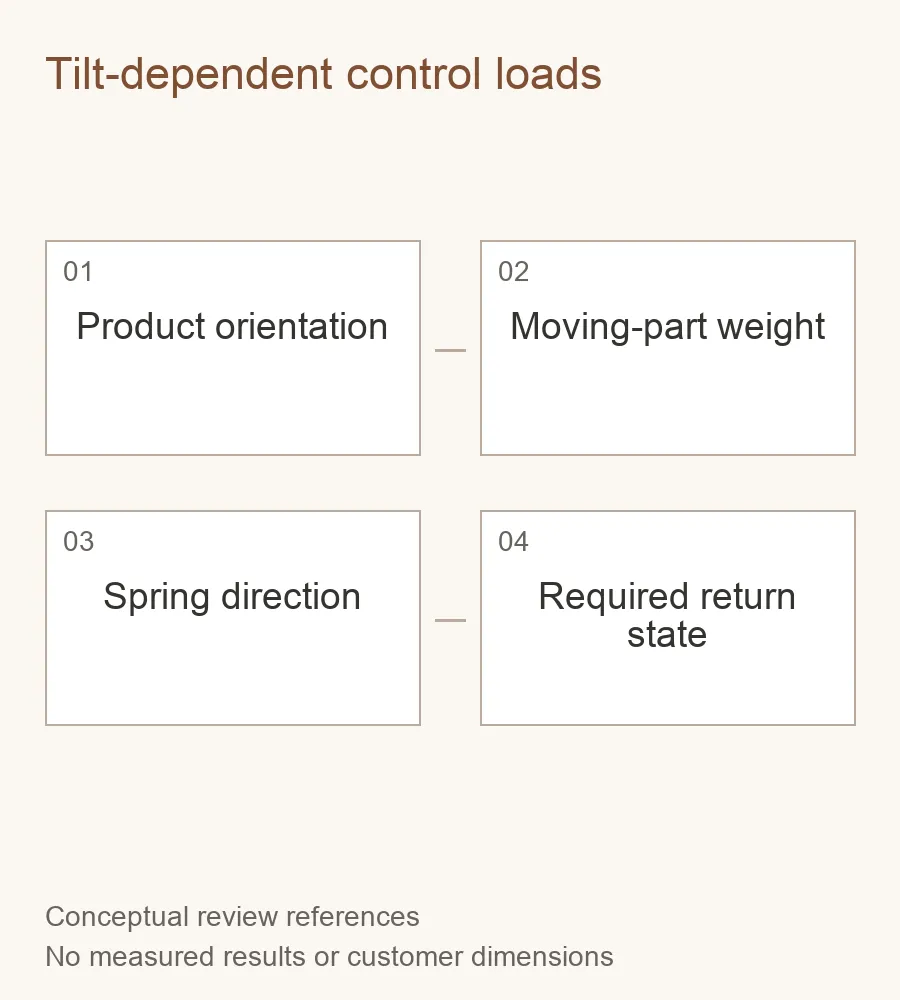
Record return completion and operating effort at matching positions for the defined orientations. Keep contact point, movement direction and test method consistent. A change caused by gravity should not be disguised by moving the gauge or altering the route.
If the control has a separate electrical or sensing function, verify its required states independently of the visible return.
The useful spring requirement connects the defined orientation set to the permitted movement and effort. It should not ask for an arbitrarily stronger spring simply because one tilted trial failed. First establish whether load direction, guide contact or another interface changed in the intended operating condition.
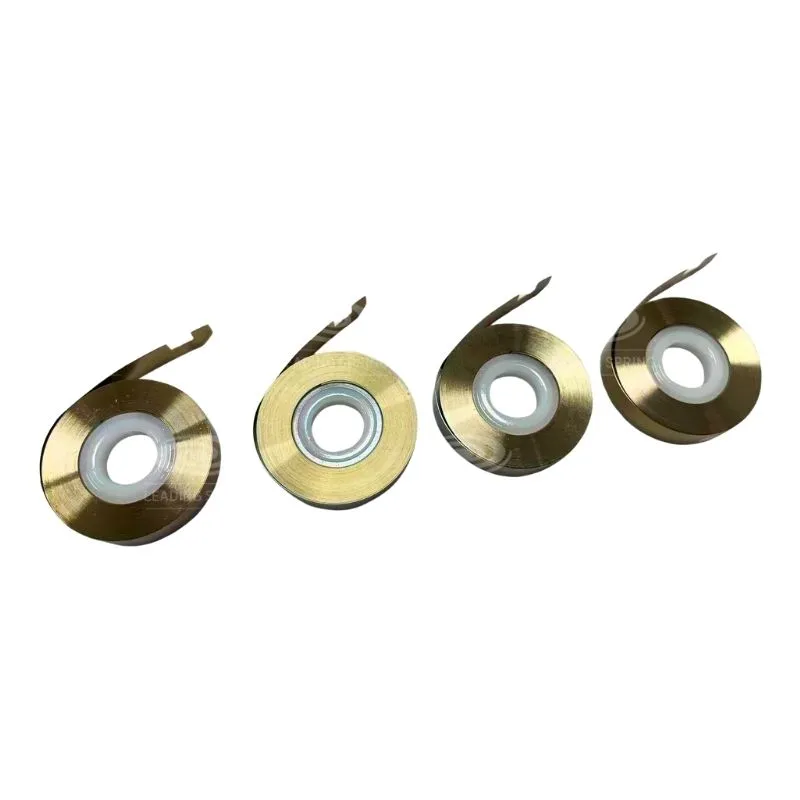
For the broader background, read Constant Force Spring Orientation in Horizontal and Vertical Slides.
Explore related spring information or discuss this mechanism with a non-confidential description.