
Two suppliers can exchange accurate CAD files and still discuss different spring geometry if their coordinate frames are not agreed. A rotated model or an undocumented local origin can change the meaning of an attachment location without changing the shape of the part.
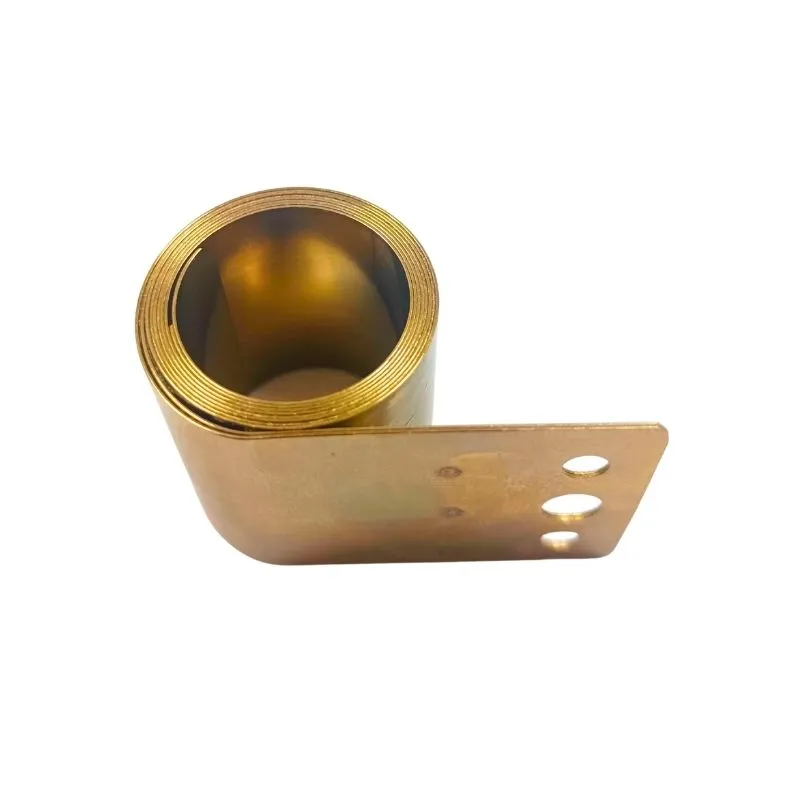
Establish a small interface frame
Identify the assembly origin, positive axes, units and the physical datums that realize them. State whether the shared file uses that frame directly or includes a documented transformation from another frame.
Use a limited interface model when the full assembly is confidential. It should retain the references needed to interpret the spring attachment, available envelope and required movement.
Check the received representation
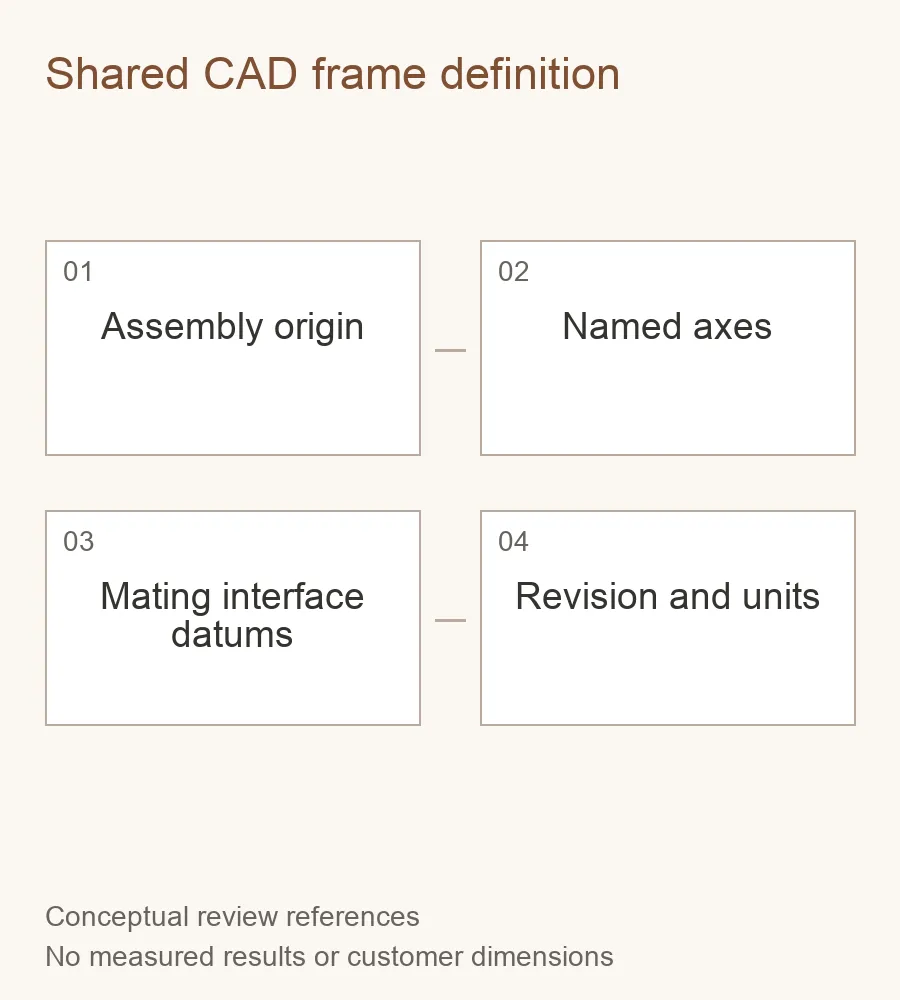
Open the actual exported file in the intended receiving workflow. Confirm a known reference relationship and orientation rather than relying only on a thumbnail. Record the file revision and any conversion performed.
Keep geometry values and coordinate transformations distinct. A receiver should not need to infer whether a mirrored or rotated view is intentional, an export setting or a display convenience.
The useful handover contains an interface-frame note alongside the model identity. This allows a spring discussion to remain precise without disclosing the complete machine and avoids treating a file that opens successfully as proof that both teams are using the same mechanical references.
For the broader background, read Spring Drawing Datums for Strip-Formed Parts.
Explore related spring information or discuss this mechanism with a non-confidential description.