
A trace that appears to show reversed spring behavior can come from a reversed position axis or viewing convention. Before changing the component, connect the reported signs to an observed physical movement.
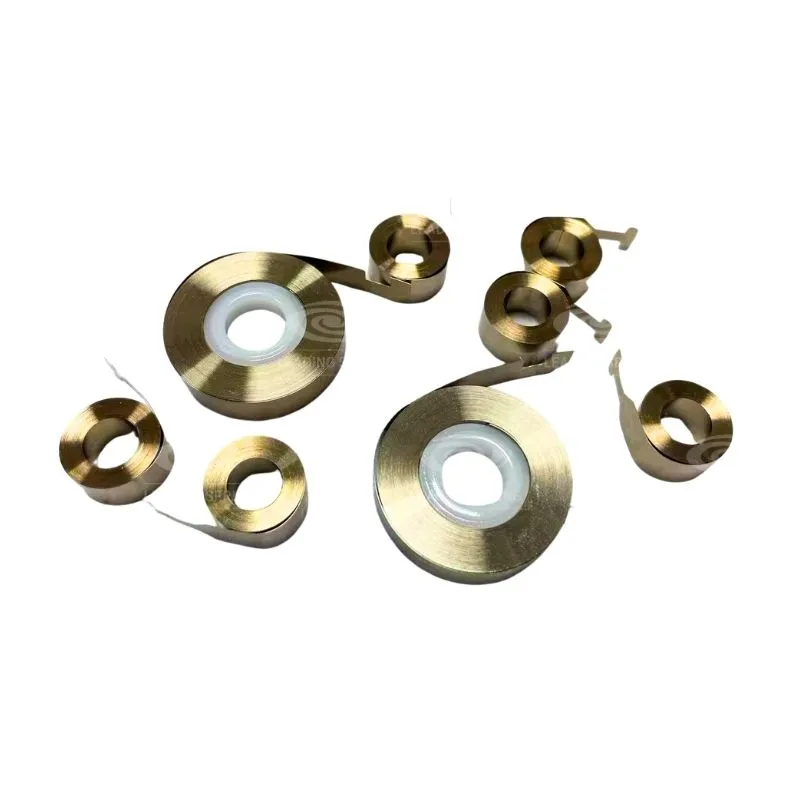
Check one direction at a time
Name the viewing side and the physical direction taken as positive. Identify the encoder signal convention and the software conversion used. Quadrature phasing and sign interpretation must follow the selected encoder and acquisition documentation.
Do not swap connections or alter machine controls as an informal spring test. Any instrumentation change belongs in the approved measurement setup and its configuration record.
Compare observations with reported coordinates
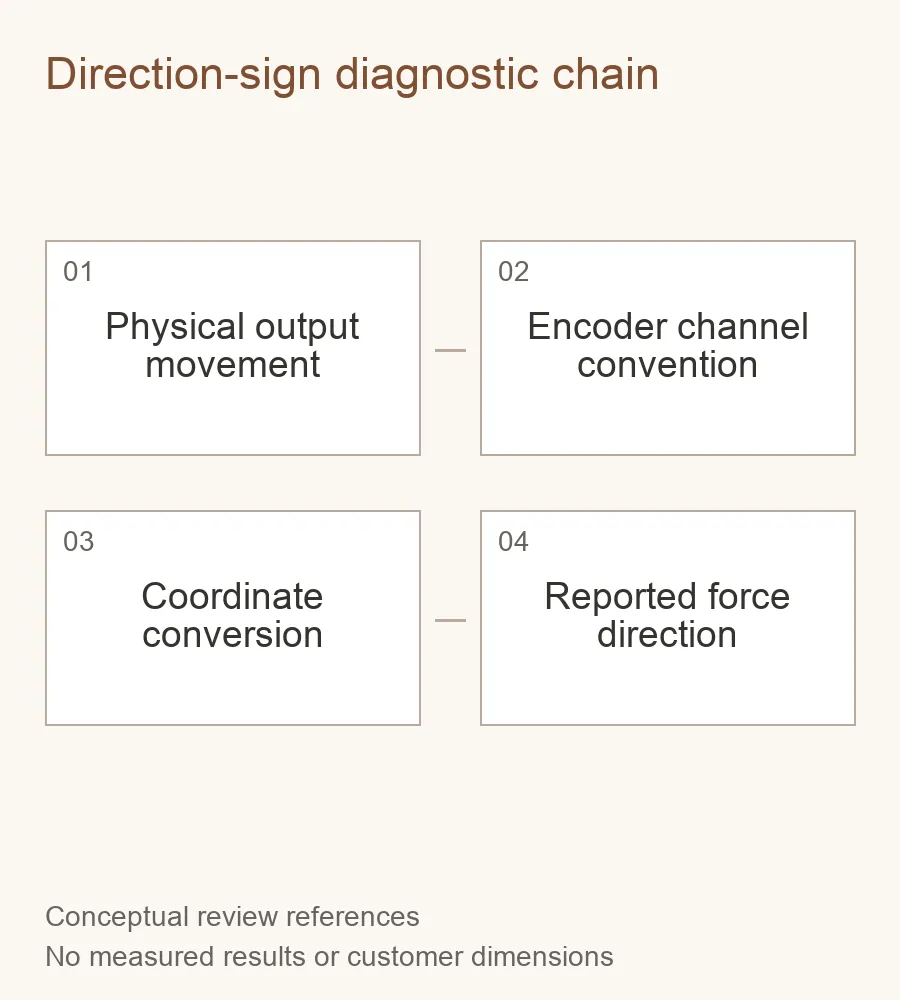
Using a controlled known movement, record the physical direction, encoder increment and corresponding force or torque sign. Keep the force sensor's sign convention separate from the position sensor's convention.
A negative value is not inherently wrong; it may be correct under the chosen frame. The problem is an unexplained disagreement between the physical task and the labels used to describe it.
Once the conventions are aligned, retain them with the test file and drawing. This prevents the next reviewer from treating the same physical motion as a different spring condition. A direction correction in data interpretation should not be reported as a physical spring modification.
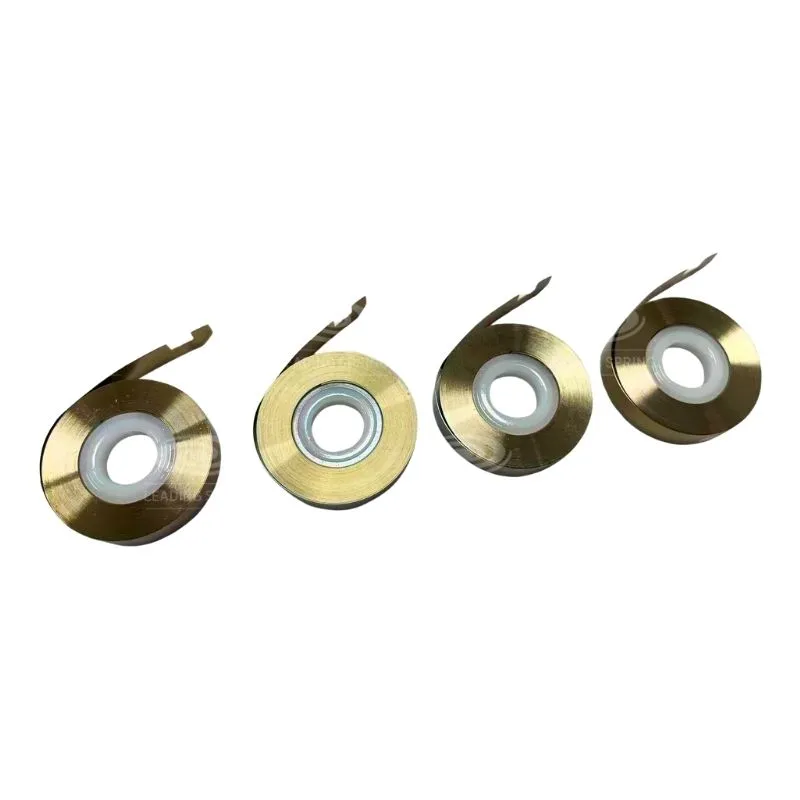
For the broader background, read Constant Torque Spring Torque Sign Convention.
Explore related spring information or discuss this mechanism with a non-confidential description.
Background reference: Encoder Products Company quadrature phasing. Component documentation does not qualify the complete mechanism.