
A cable reel that clears a robot during normal movement may obstruct a tool-change path. Tool exchange introduces positions, detached interfaces or temporary cable support that do not occur in the production motion alone.
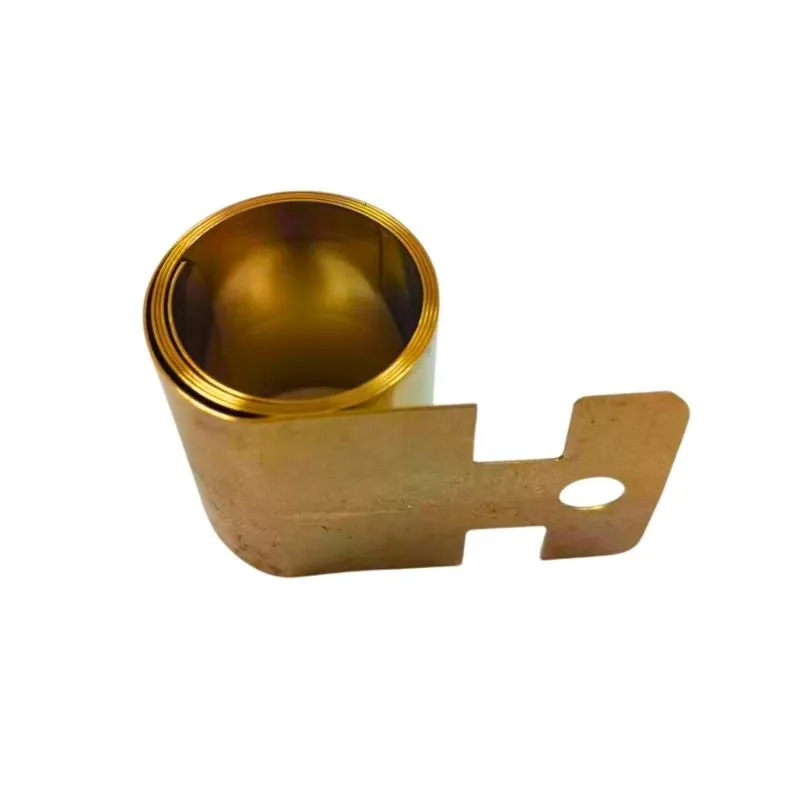
Draw the exchange envelope
Show the tool, its coupling, cable outlet and any reel bracket through the approved exchange sequence. Include the space occupied by boots, strain relief and connectors. A cable centerline does not describe the full clearance envelope.
Identify when the cable remains connected and when an end is supported elsewhere. The reel's pull can affect that handover even when little cable is being paid out.
Check the temporary states
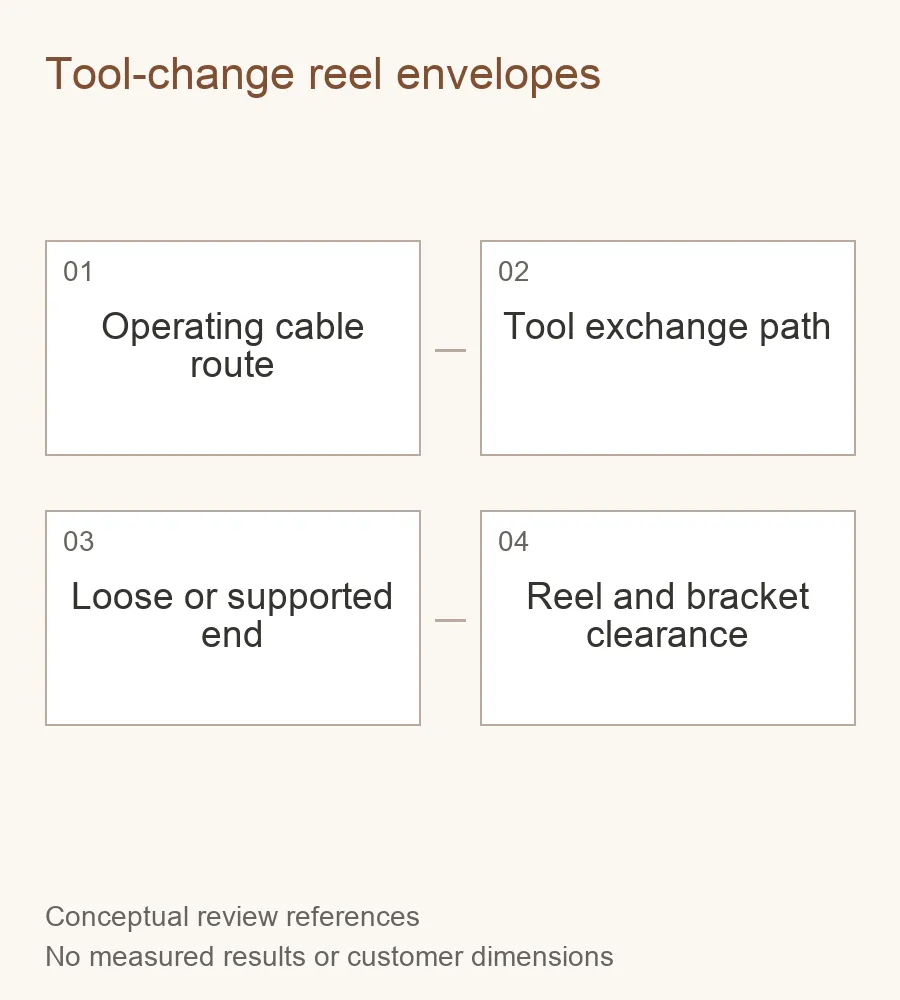
Record where the cable can collect, cross a guide or meet a coupling face during the exchange. Keep the robot's approved tool-change and isolation procedures in control; the spring review is not authority to enter a robot's movement area.
Evaluate return behavior with the intended temporary support fitted. A test performed with a person holding the cable differently may remove the interference being investigated.
For the application discussion, a simplified exchange envelope and cable-state sequence are sufficient to identify the spring interfaces. They are more useful than the robot's normal reach outline alone. Accept the reel arrangement against both operating and approved exchange states rather than assuming one automatically covers the other.
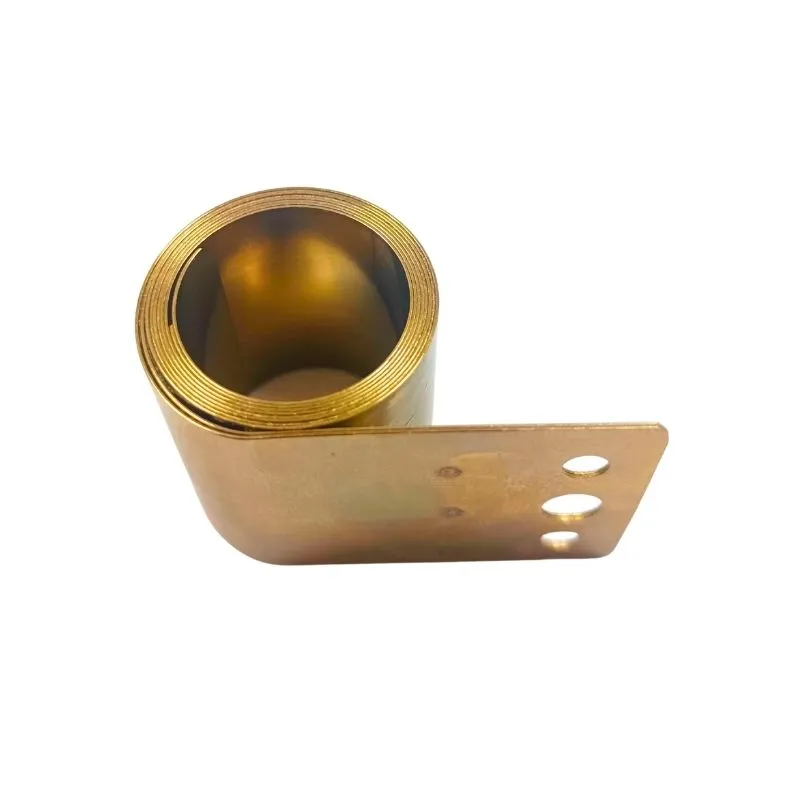
For the broader background, read Cable Springs for Robot Teach Pendant Cable Management.
Explore related spring information or discuss this mechanism with a non-confidential description.