
A drip loop is a routing feature, not an enclosure rating. In a spring-reel installation, the loop must also remain compatible with changing cable length and repeated movement. A loop that works at full extension may disappear when the cable returns.
Follow the route in each position
Show the cable at parked, intermediate and extended positions. Identify where water could collect and where the route enters an enclosure. Include changes caused by the intended mounting orientation; a tabletop sketch may not describe a wall-mounted installation.
Keep the cable's moving bend requirements and strain relief intact. Adding a tight low point to create a loop can introduce a new mechanical problem.
Separate drainage from protection claims
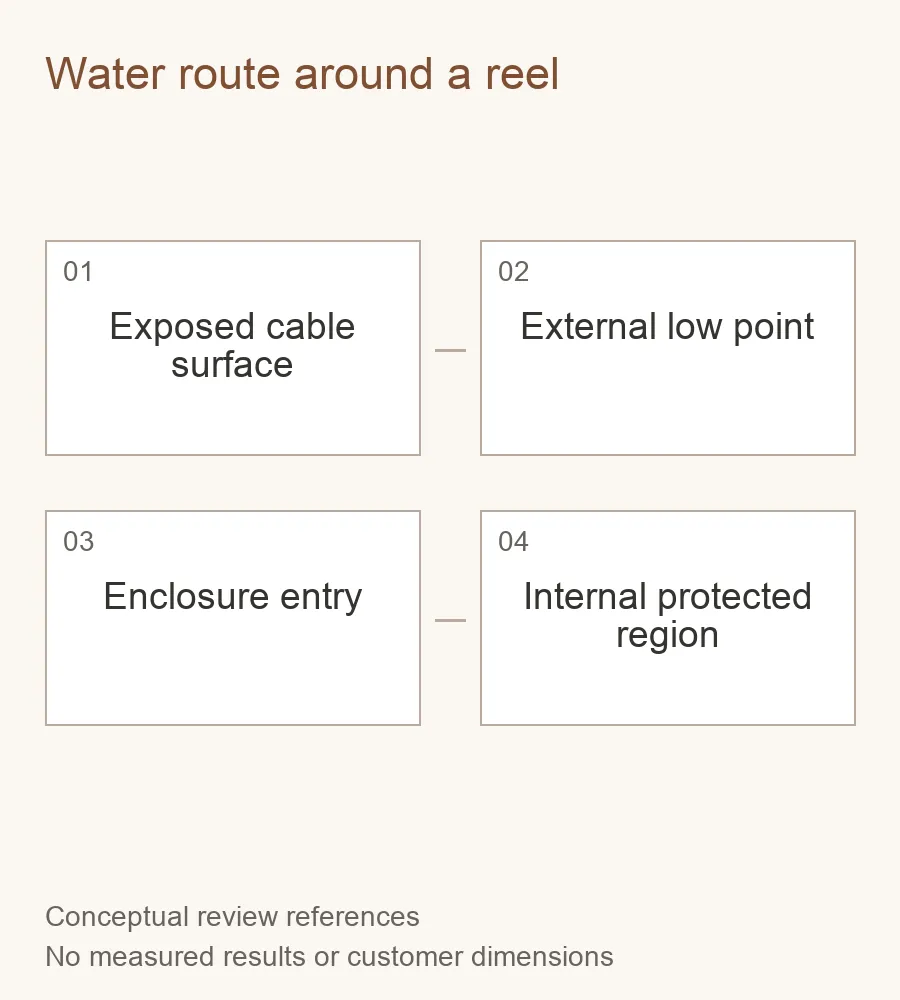
The enclosure, seals, cable entry and connectors need their own documented suitability for the intended exposure. A visible loop does not prove that water cannot enter or that the reel may be used in a washdown environment.
Review whether the return motion carries a wet cable across the entry or stores it inside the housing. That is a different question from rain running along an extended cable. Define the expected exposure and inspection method rather than assuming the same routing feature answers both.
For a spring review, provide the route envelope and any added resistance associated with approved entry components. Keep water-management approval with the responsible product designer and the selected components' requirements.
For the broader background, read Spring Strip Storage Packaging and Moisture Control.
Explore related spring information or discuss this mechanism with a non-confidential description.