
A ribbon cable inside a moving display can add resistance and also receive loads from the return mechanism. It should not become an unintended spring, travel limiter or retention strap simply because it shares the hinge space.
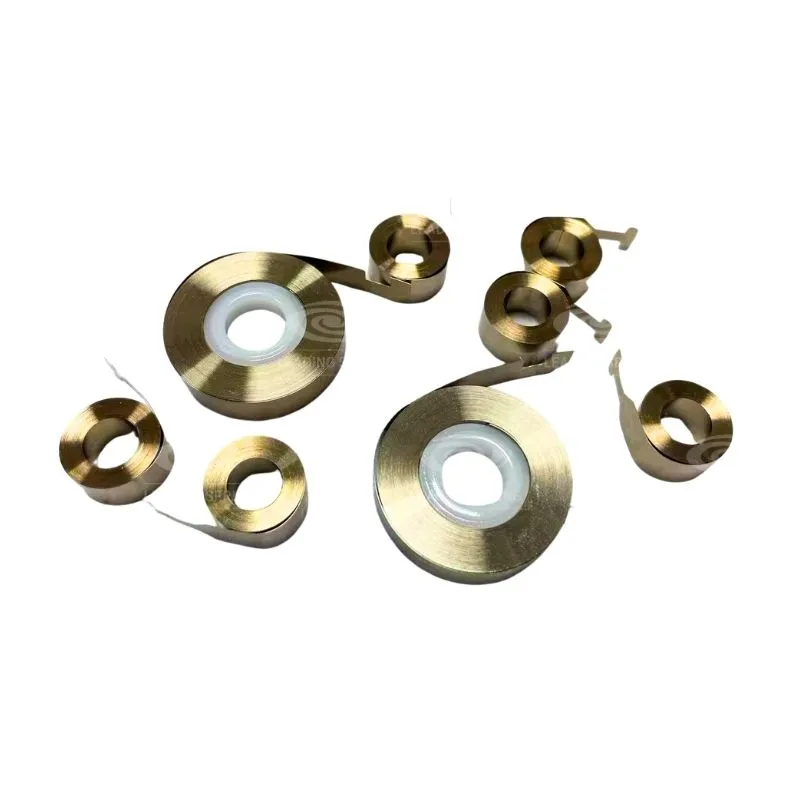
Follow the loop through rotation
Record the ribbon cable's orientation, supported ends and permitted bend path. Use the cable assembly supplier's moving-flex requirements. A neat folded installation view does not establish suitability for repeated display movement.
Keep the display angle and cable state in the same position sequence. A loop can become taut or contact a neighboring feature before the display reaches its mechanical stop.
Keep the spring load off the connector
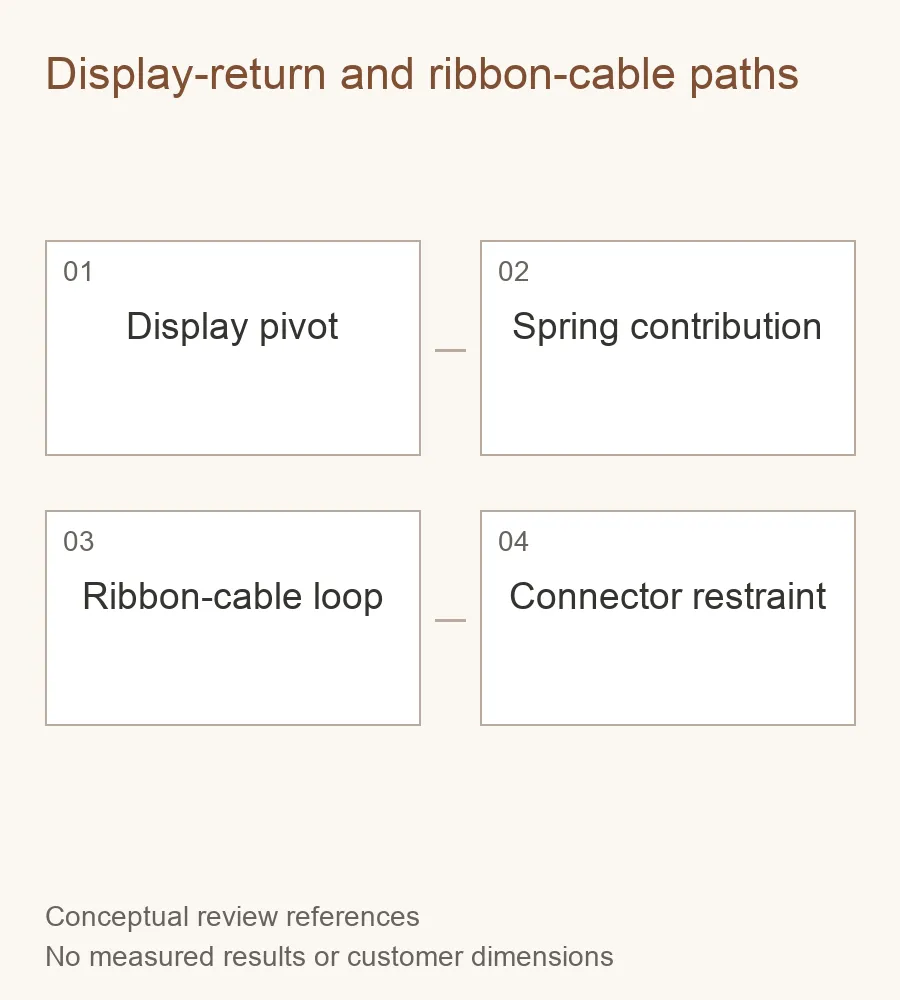
Identify the structure that reacts the spring contribution and the strain-relief arrangement that protects the cable termination. A connector should not be assumed to carry the display's return load.
Compare effort with the final cable route installed. If the effort changes after a cable revision, preserve that route and part identity before selecting another spring.
Accept the display's movement, cable condition and electrical performance against their respective requirements. A successful return is useful mechanical evidence, but it does not qualify ribbon-cable life or connector loading. The spring request should therefore show both the available hinge space and the controlled cable envelope.
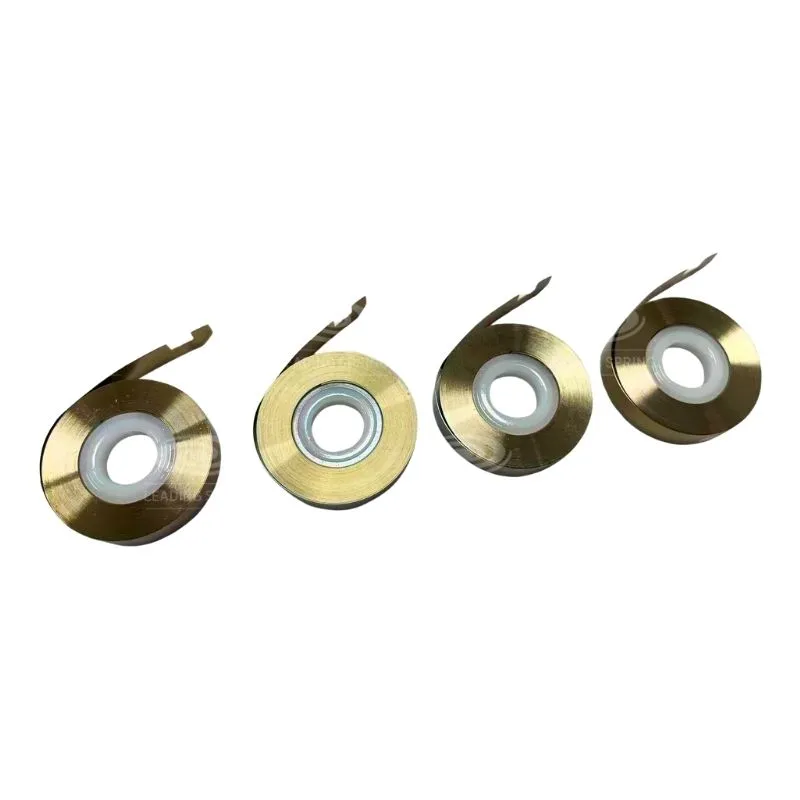
For the broader background, read Constant Torque Springs for Laptop Display Hinges.
Explore related spring information or discuss this mechanism with a non-confidential description.