
A guide wiper can add resistance that matters to a lightly loaded counterbalance. The resistance may change after cleaning, replacement or a period at rest. Choosing more spring force before identifying that contribution can improve one direction while making the opposite direction uncomfortable.
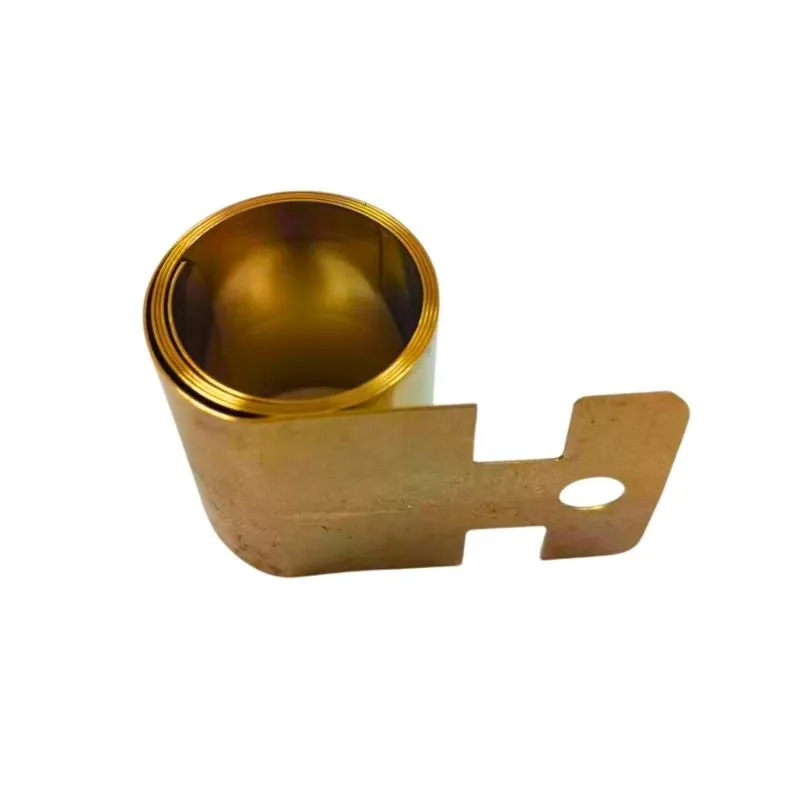
Describe the wiper's condition
Record the wiper version, lubrication condition, installed interference and the state before movement. A new dry wiper and a conditioned lubricated one are not equivalent test conditions. Include the guide supplier's installation requirements rather than adjusting contact merely to make a force reading look better.
The relevant evidence is the assembled effort in both directions, at matching positions. A counterbalance contributes in one direction while friction opposes the current motion. This makes an up-and-down comparison more revealing than a single lift measurement.
Isolate the question without defeating protection
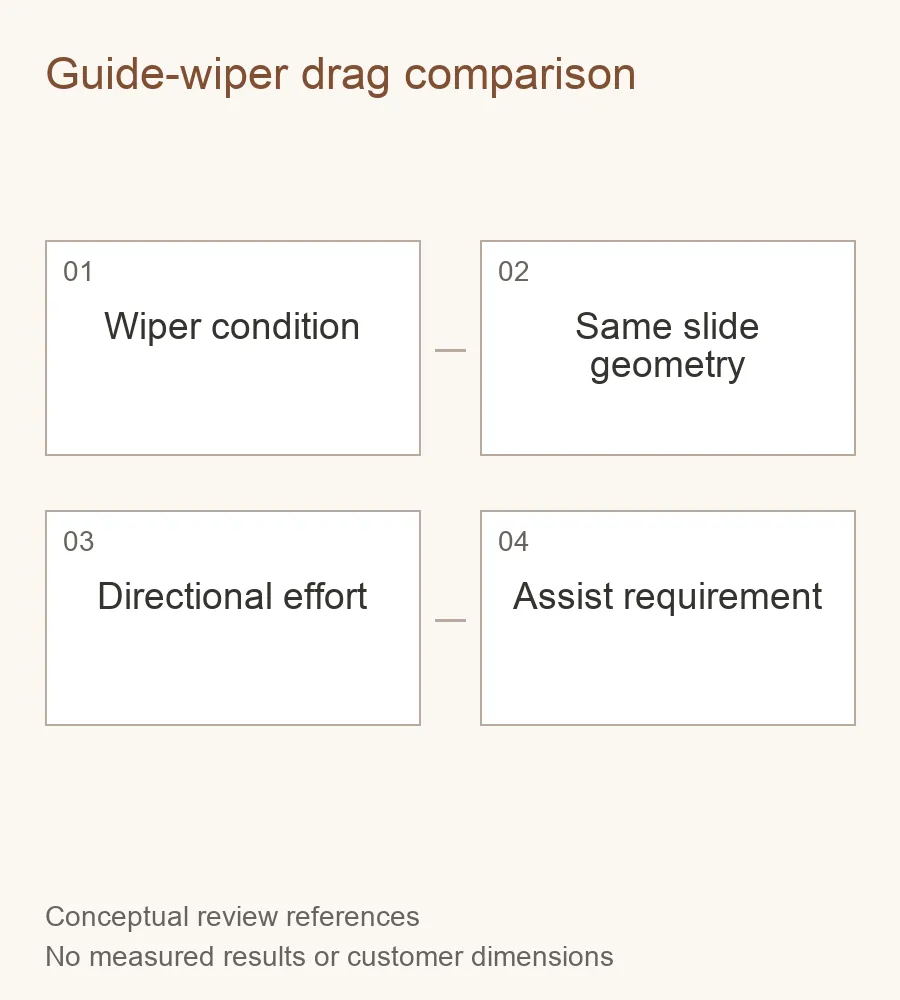
If a comparison without the wiper is needed, it belongs in an approved fixture or engineering test that preserves support and contamination controls. Removing protection from an operating machine is not a general troubleshooting instruction.
Compare a known installation with the suspect installation while holding the spring, guide alignment and load constant. Note whether the difference is concentrated at startup, persists during motion or appears near a particular guide feature. These patterns help decide what to investigate; they do not identify the cause on their own.
Once the expected wiper condition is defined, include its contribution in the operating-effort requirement. The spring target should describe the intended production assembly, not a conveniently low-friction laboratory configuration that will never reach the customer.
For the broader background, read Constant Force Spring Force Hysteresis in an Assembled Slide.
Explore related spring information or discuss this mechanism with a non-confidential description.
Background reference: THK guide load context. Component documentation does not qualify the complete mechanism.