
A flexible shaft coupling can store some of the angular movement supplied by a return spring before the load moves. This is different from the spring failing to unwind. Measuring only one shaft can place the observed delay on the wrong component.
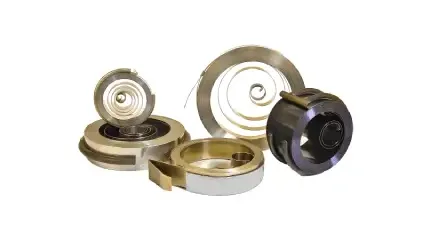
Put an angle reference on each side
Record spring-side and load-side angle using a common time base and stated rotation direction. Identify the coupling, its mounting and the applied load. A relative angular offset under load can include elastic twist; clearance or slip can add other behavior.
Avoid treating the coupling's nominal flexibility as permission for unlimited movement. Its allowable torque, misalignment and operating conditions must come from the selected component's documentation.
Look for recovery, not just a gap
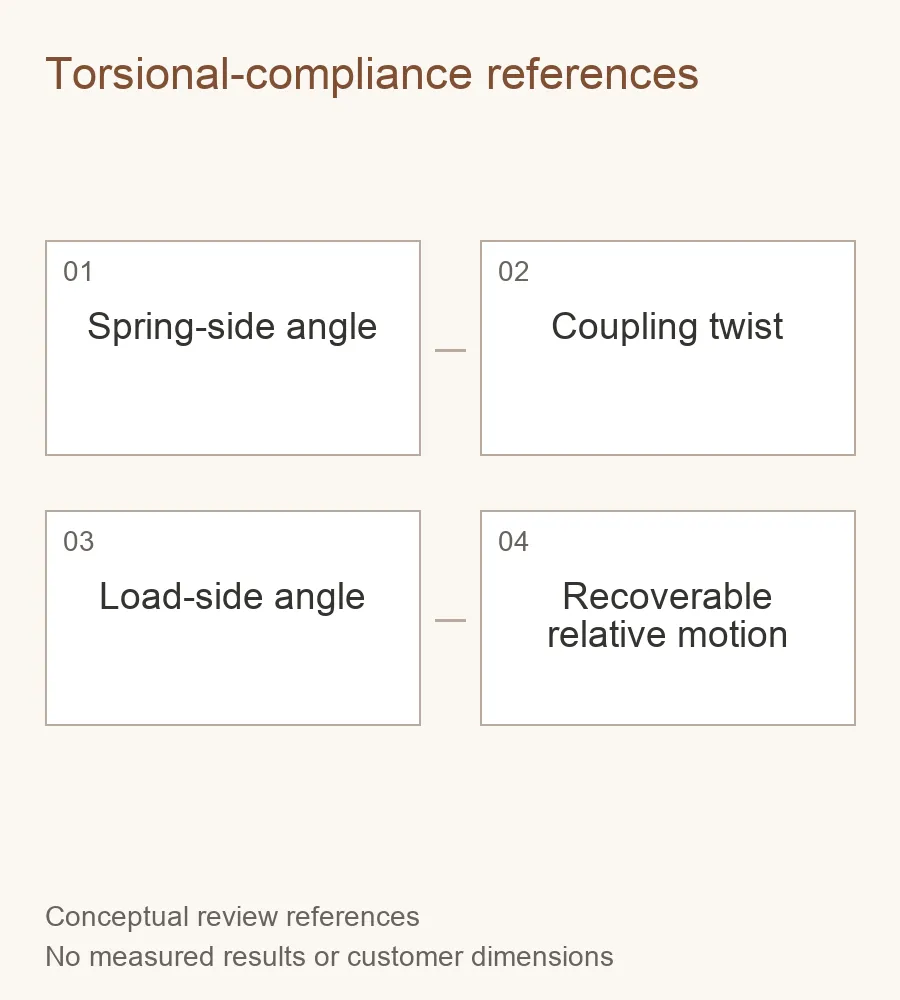
Compare what happens as the transmitted load rises and falls in an approved test. Recoverable relative movement suggests compliance, while a changed unloaded relationship may require investigation of seating, slip or another permanent change. The observations alone do not establish which part has moved.
The coupling can also affect the return's transient behavior. A static angle comparison does not capture every effect during acceleration or stopping, so retain motion data when the requirement concerns overshoot or impact.
For acceptance, specify where output position is measured. A spring-side encoder cannot automatically prove load-side positioning accuracy. Keep the coupling and its installed settings in the sample identity so that a later coupling substitution does not inherit approval from a different torsional system.
For the broader background, read Power Spring Running Torque Versus Breakaway Torque.
Explore related spring information or discuss this mechanism with a non-confidential description.