
A spring on one side of a worm drive does not necessarily produce a useful return from the other side. The drive's ability to transmit motion backward depends on its particular geometry, friction and operating conditions. Do not assume either universal self-locking or universal backdrivability.
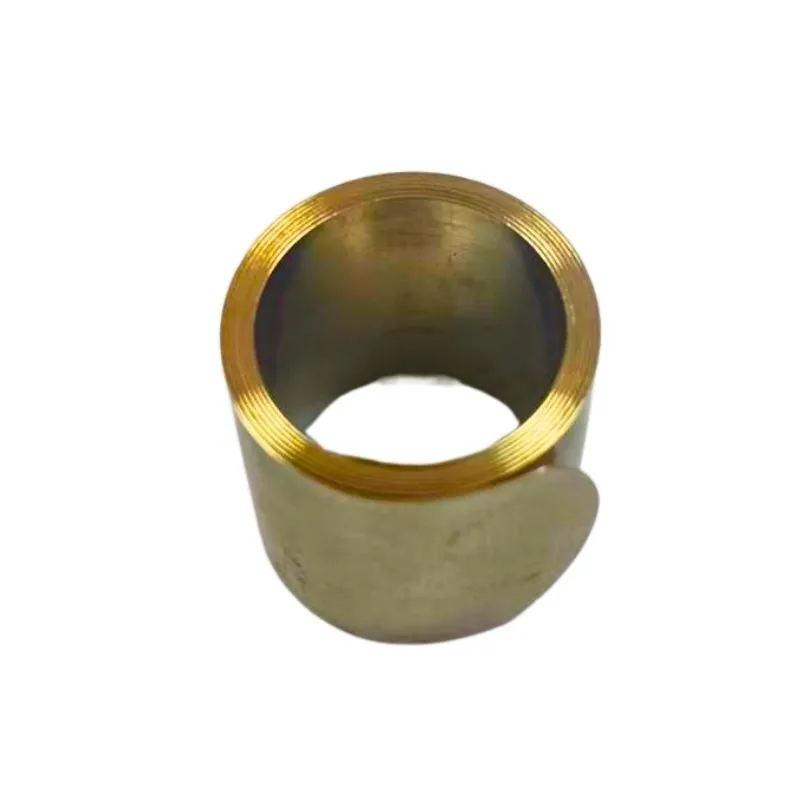
Locate the spring in the transmission
Show the spring shaft, worm shaft, wheel and load. Identify the movement used to store energy and the intended return path. If the return requires the wheel to drive the worm, obtain the drive manufacturer's information for that direction.
A nominal ratio only describes the ideal position relationship. It does not establish reverse efficiency, startup behavior or a holding function. Those questions remain open even when an ideal torque calculation appears favorable.
Review the intended operating states
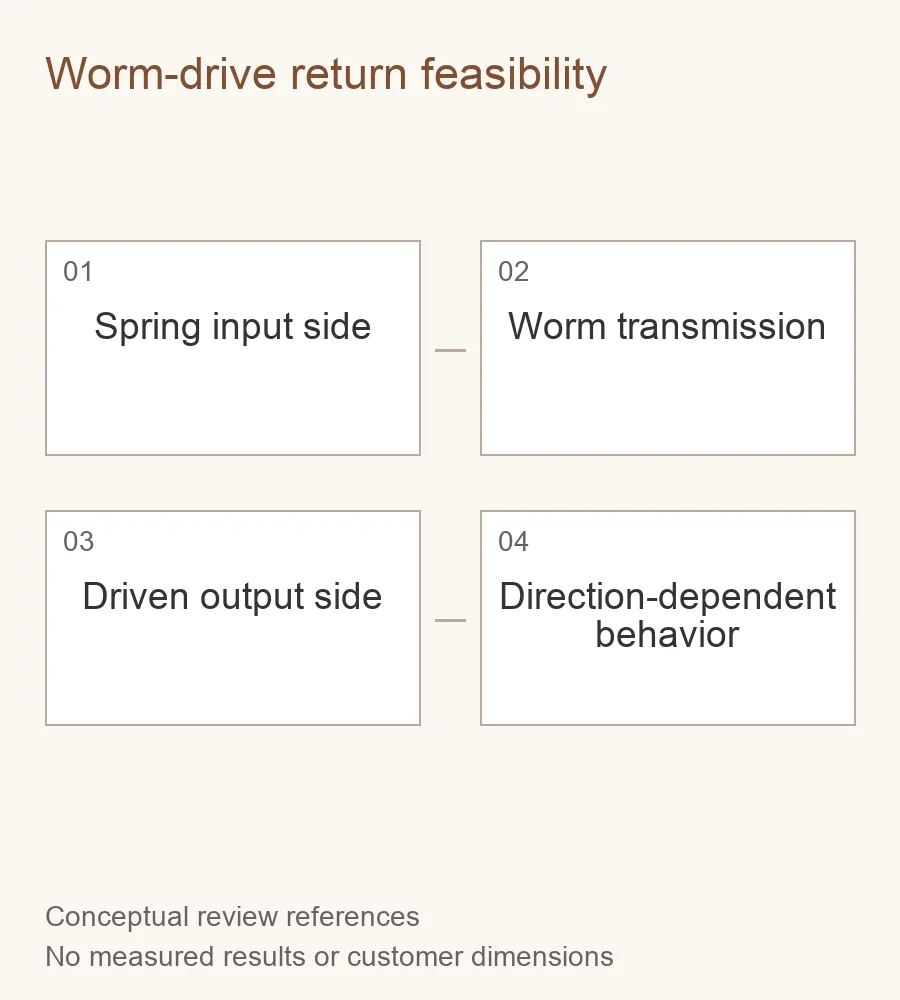
Include the lightest and heaviest permitted load, relevant temperature range and whether the drive is new or conditioned. The responsible designer should decide which cases determine return feasibility and which determine retention.
Do not test an uncertain reverse-driving condition by removing restraint from a loaded prototype. Use an approved supported setup and the transmission supplier's handling requirements.
The spring enquiry should identify the required shaft torque at the actual interface, with the transmission's unresolved behavior clearly marked. If the drive does not permit the intended return path, a larger spring is not an automatic solution. Changing the transmission architecture may be necessary before spring sizing becomes meaningful.
For the broader background, read Constant Torque Spring Gear Ratio Selection.
Explore related spring information or discuss this mechanism with a non-confidential description.
Background reference: THK transmission selection context. Component documentation does not qualify the complete mechanism.