
A soft-close unit adds a control contribution over part of a movement. If a spring assist also acts there, the final behavior depends on both components and their engagement positions. Selecting each independently can leave the assembly unable to finish closing or moving faster than intended before control begins.

Mark the overlap interval
Show the position at which the soft-close unit engages and the spring's state over the remaining travel. Identify the direction in which the control acts. Rotary damper documentation, for example, distinguishes operating arrangements rather than treating every unit as bidirectional and unlimited in travel.
Keep the unit's selected configuration with the test record. A part that looks similar can have a different control direction or engagement relationship.
Compare completion and arrival
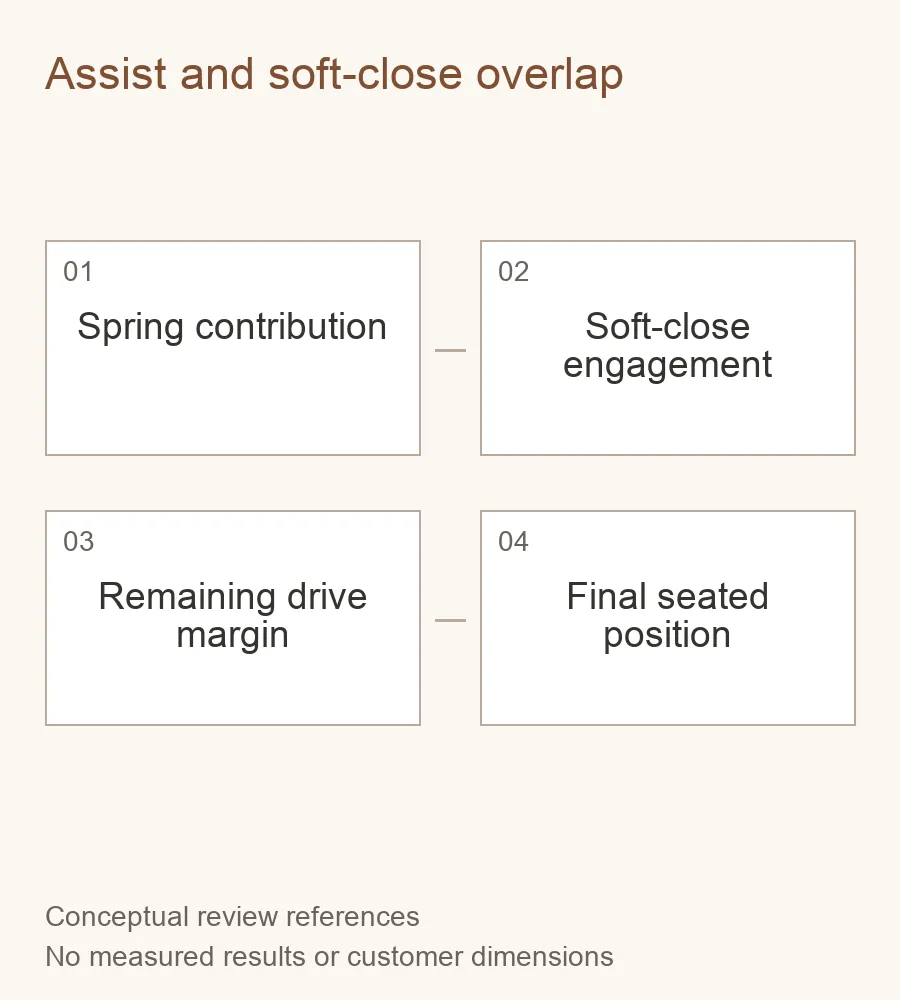
Record whether the mechanism reaches its intended seated position and how it arrives. A slow-looking movement is not sufficient if the panel stops short. Conversely, successful seating does not establish an acceptable speed or contact load.
Assess the defined load and environmental cases chosen by the product designer. Do not increase spring force merely until one room-temperature prototype closes.
The accepted assembly should connect spring output, control engagement and final-position requirements. This prevents a later change in the soft-close unit from inheriting approval based only on the unchanged spring part number.
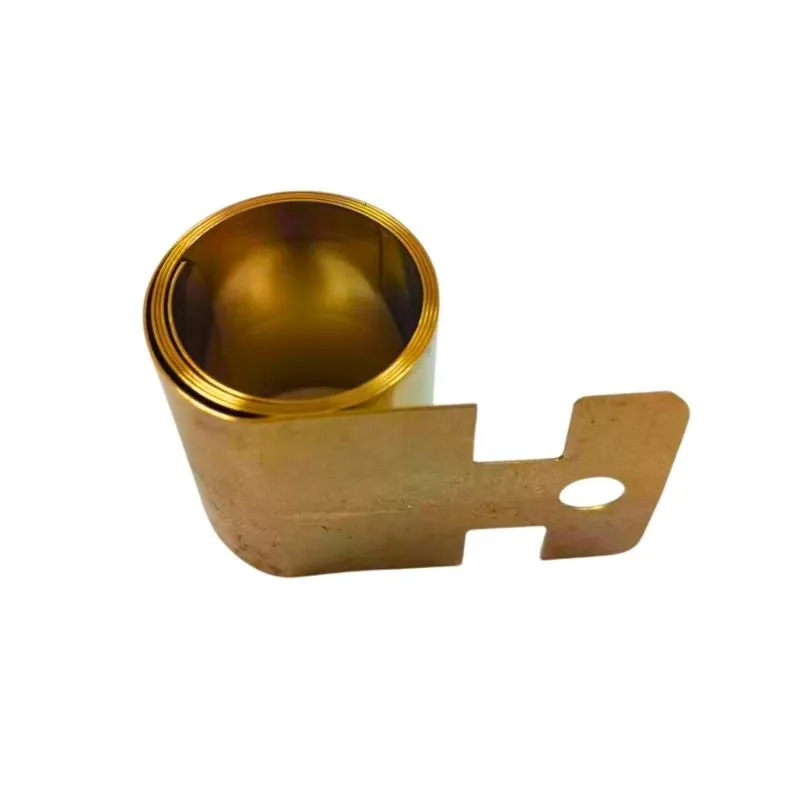
For the broader background, read Constant Torque Spring with a Rotary Damper.
Explore related spring information or discuss this mechanism with a non-confidential description.
Background reference: ACE rotary damper catalogue. Component documentation does not qualify the complete mechanism.