
A gap between loading and unloading traces shows that the measured response depends on direction and history under the test conditions. It does not, by itself, define a damper or establish controlled return speed.
Keep the measurement boundary visible
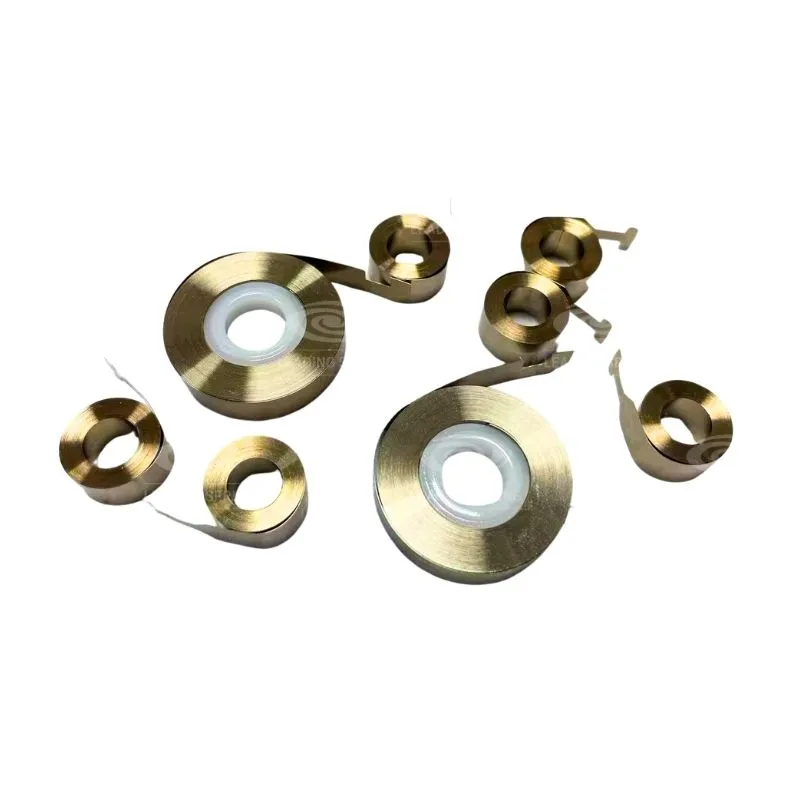
An assembled spring mechanism can include friction from guides, bearings, seals and contacting layers. Its hysteresis trace therefore need not describe the spring material alone. Identify the components and conditions included in the measurement.
A control element such as a damper has its own operating direction, range and response characteristics. Its suitability cannot be inferred merely because another part of the assembly dissipates energy.
Ask which function is required
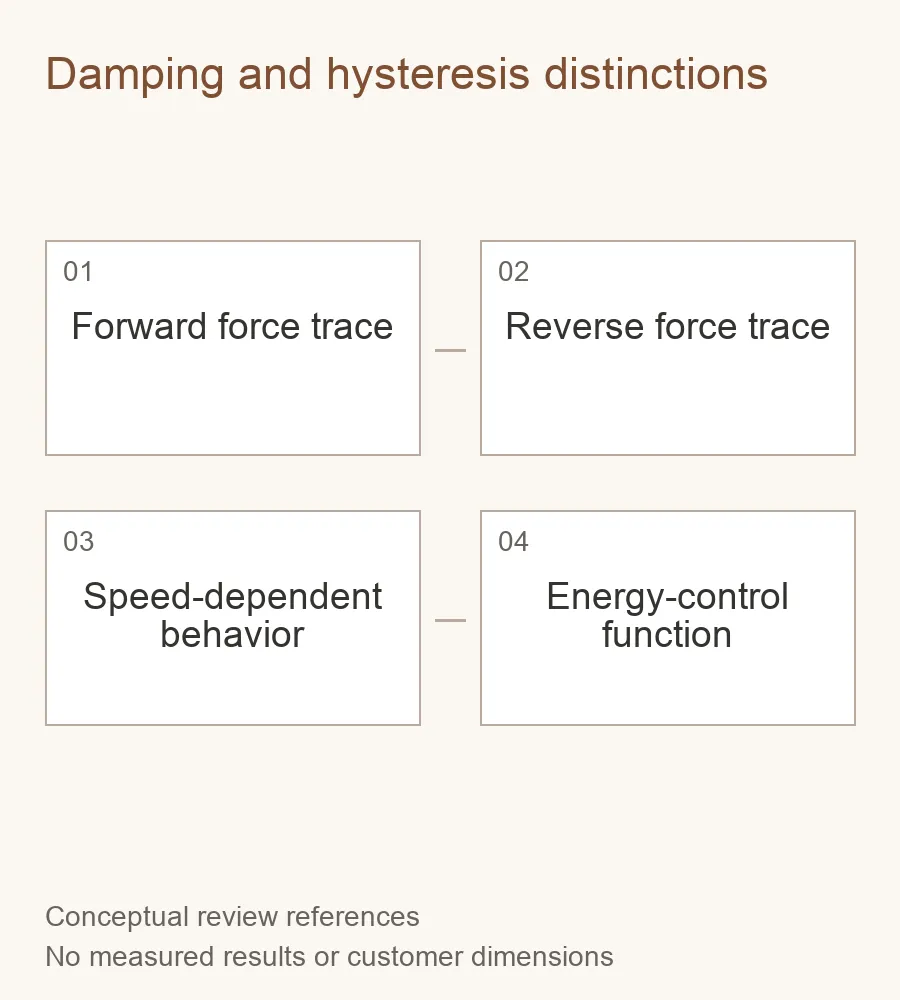
If the problem is operating effort, compare the forward and reverse response at agreed positions. If the problem is excessive return speed, define the dynamic requirement and evaluate the complete movement. The two investigations may share data but answer different questions.
Do not convert one slow test into a broad speed-control claim. Retain the speed, dwell and preceding motion with the traces so that comparisons remain interpretable.
The spring and control-element suppliers should receive a clear function split. A measured hysteresis loop can inform the review; it does not replace a specified damping function or establish that every release will be acceptably controlled.
For the broader background, read Spring Acceptance of Directional Hysteresis.
Explore related spring information or discuss this mechanism with a non-confidential description.