
A filter can make a force trace easier to read while reducing or changing the appearance of a short peak. If the requirement concerns peak load, the acquisition and processing settings belong in the acceptance definition.

Identify the reported quantity
State whether the result is a raw sampled maximum, a filtered maximum, a display reading or an instrument's peak-hold value. These can come from different processing paths. The instrument manual, not the screen label alone, should establish their meaning.
Record sample rate, filter settings and any averaging used. A smooth graph exported from software may not show the same quantity that triggered a limit during the test.
Keep the underlying evidence
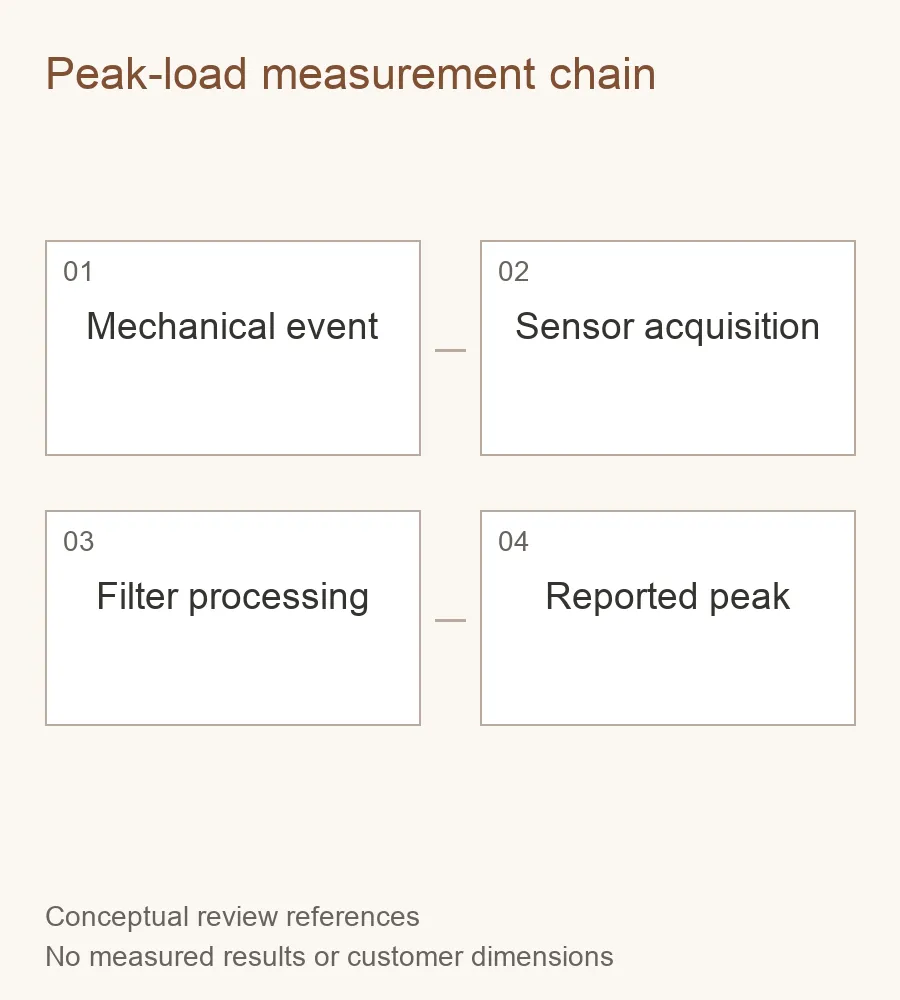
Retain the available unprocessed data and processing configuration. Where comparison is appropriate, show how the chosen processing affects the feature relevant to the requirement. Do not select a filter simply because it removes an inconvenient peak.
Also distinguish mechanical impact from measurement artifacts through the approved instrumentation review. Turning all filtering off is not a universal route to an accurate result.
The final report should make the peak reproducible from the defined measurement method. A lower displayed maximum after a settings change is not evidence that a spring revision reduced the actual load. First establish that the old and new results represent the same reported quantity.
For the broader background, read Spring Raw Trace Retention for Troubleshooting.
Explore related spring information or discuss this mechanism with a non-confidential description.
Background reference: OMEGA force gauge manual. Component documentation does not qualify the complete mechanism.