
A changed force reading can reflect a changed measurement zero as well as a changed spring. The test needs a repeatable reference state before the difference is reported as spring output drift.
Define what zero means
Identify the sensor type, measurement chain and reference load condition. An electronic tare can include fixture loads or other contributions; it is not automatically a physical absence of force at the spring.
Use the instrument supplier's instructions. Different sensing technologies have different behavior during long-duration measurements. Kistler's piezoelectric force documentation, for example, discusses measurement duration and drift rather than unlimited static measurement.
Compare reference states without hiding the result
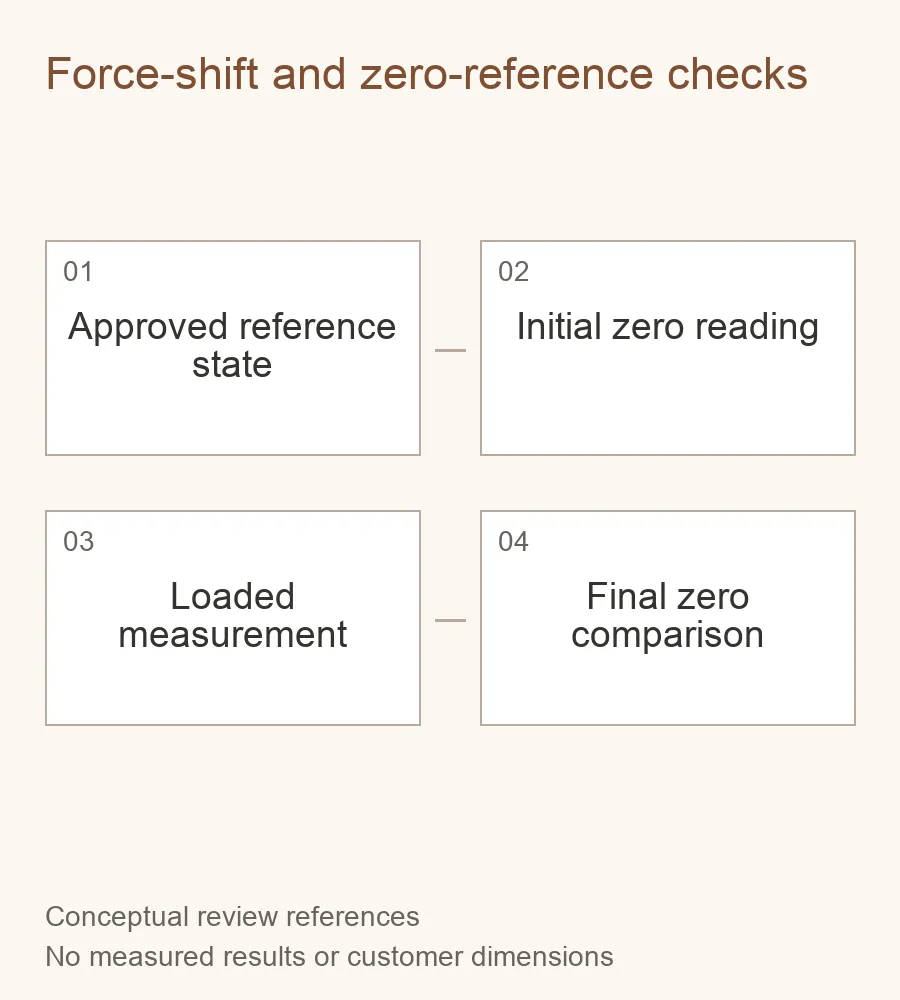
Record the initial reference reading and the corresponding reading after the agreed measurement sequence. Preserve both before applying any correction. Re-zeroing repeatedly without a record can remove the very change the investigation needs to explain.
Any movement into a reference state must follow the approved supported test procedure. Do not disconnect a loaded spring or remove fixture restraint simply to obtain an unloaded reading.
If the reference has shifted, assess the measurement chain and the resulting uncertainty before attributing the full difference to the component. The report should distinguish observed reading change, zero-reference behavior and the conclusion supported about the spring. Those are related observations, not interchangeable statements.
For the broader background, read Spring Test Measurement Uncertainty in Acceptance.
Explore related spring information or discuss this mechanism with a non-confidential description.
Background reference: Kistler force measurement manual. Component documentation does not qualify the complete mechanism.