
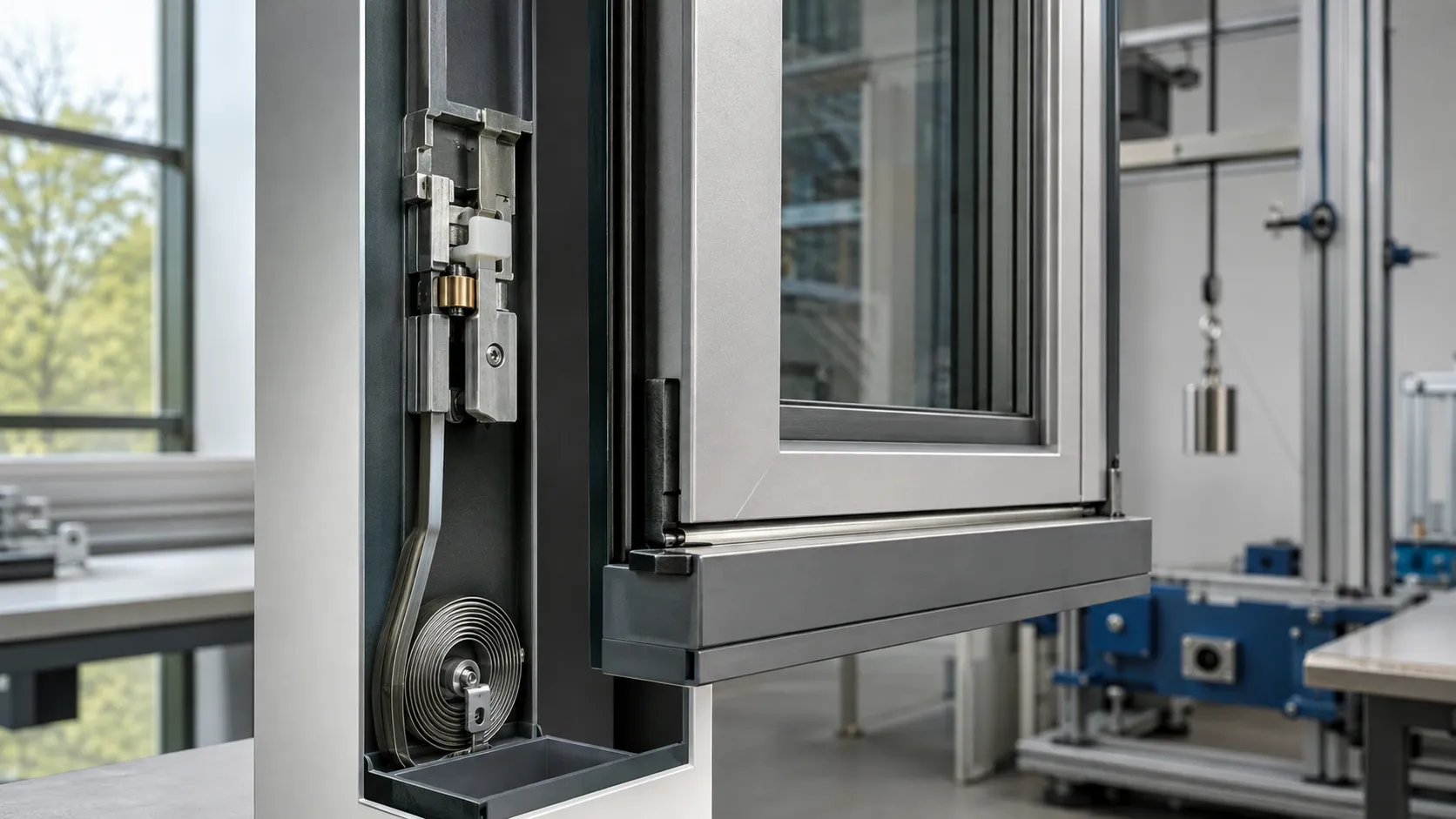
A constant force spring can counterbalance a window sash by applying a nearly consistent lifting force through the opening stroke, reducing the effort needed to raise the sash and helping it remain stable.
For product teams comparing compact return and counterbalance options, the spring should be evaluated as part of the full mechanism. Shenzhen Leading Spring develops custom constant force springs around the required load, motion, space, attachments, environment, and production target.
Quick answer: when is this spring solution suitable?
A constant force spring can counterbalance a window sash by applying a nearly consistent lifting force through the opening stroke, reducing the effort needed to raise the sash and helping it remain stable. It is most suitable when the product needs repeatable mechanical force in a compact package and the spring can be protected from over-travel, sharp edges, and misalignment.
Where this mechanism is used
- Single-hung window balances
- Double-hung sash systems
- Service windows
- Vertical architectural access panels
How the spring works in the assembly
The spring force should offset the sash weight after guide and seal friction are considered. A paired arrangement can improve balance and reduce racking, while the carrier, pulley, or direct attachment determines how force reaches the sash. The spring must coil and uncoil without scraping the jamb or exceeding its minimum bend radius.
Key design parameters
| Parameter | Why it matters |
|---|---|
| Sash weight | Defines total counterbalance force. |
| Usable travel | Sets extended strip length and mounting position. |
| Jamb envelope | Limits coil diameter and strip width. |
| Seal friction | Changes opening and closing effort. |
| Moisture exposure | Guides material and corrosion protection. |
Common failure modes to prevent
An undersized system produces a heavy sash; an oversized one can make closing difficult or lift the sash unexpectedly. Unequal left-right force causes binding. Edge damage, poor coil alignment, debris, and corrosion can shorten life even when the nominal force is correct.
Recommended prototype and life testing
Measure operating force in both directions at several sash positions. Test each side separately for force variation, then run full-window cycles with production seals, glazing mass, locks, and guides. Add humidity or salt exposure when the installation environment requires it.
What to include in an RFQ
Provide sash mass, required travel, jamb cross-section, mounting points, one- or two-spring layout, target opening and closing force, orientation, corrosion environment, and cycle-life requirement.
Custom spring development support
Shenzhen Leading Spring supports application review, custom spring design, prototypes, and production. Final force, torque, material, dimensions, and attachment details should be confirmed from the customer’s drawings and mechanism tests. To discuss a new project, contact our spring engineering team.
FAQ
Should both sides of a window use the same spring force?
Usually yes for a symmetric sash, but friction and hardware differences should be measured before final release.
Can constant force springs replace block-and-tackle balances?
They can in suitable layouts, but packaging, serviceability, travel, and applicable window requirements must be reviewed as a complete system.
Why does the sash drift after installation?
The net balance may be outside the holding window because sash mass, spring force, seal friction, or left-right alignment differs from the prototype assumptions.