
A motorized slide can feel easy to move because its spring offsets much of the load. That does not establish what happens when the drive is disengaged for manual operation. The disengagement changes the load path and may remove resistance that was helping retain the slide.
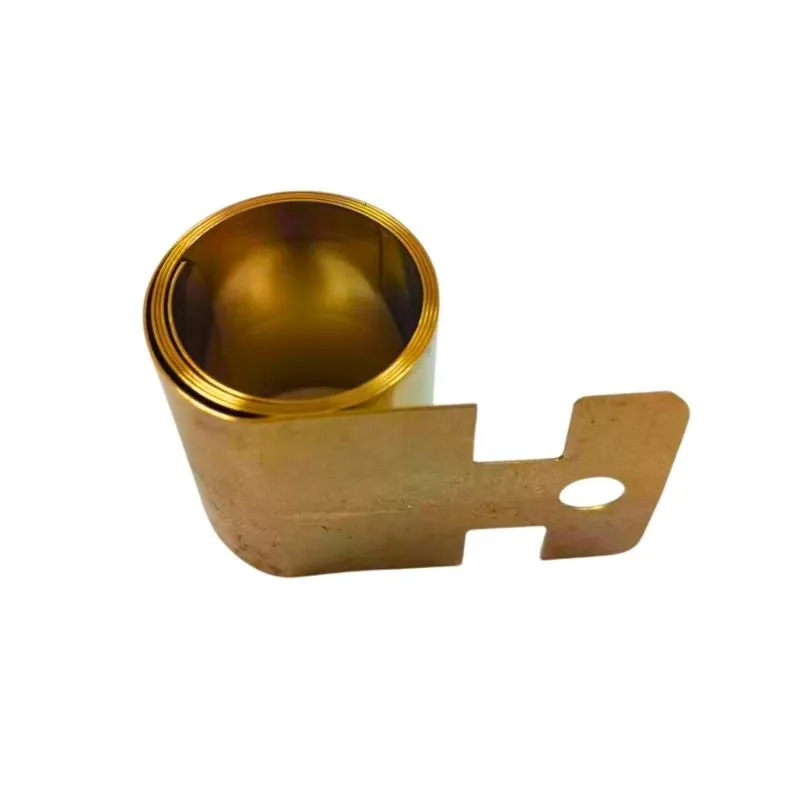
Define the state before release
Specify the carriage position, permitted payload and the support or holding provision required before the manual interface is enabled. Identify whether the drive remains connected, freewheels or is mechanically uncoupled. These are different override concepts.
Keep the operating instruction separate from the spring rating. A nominal balance point cannot serve as a holding guarantee across load variation, friction changes and the full travel.
Check movement in both directions
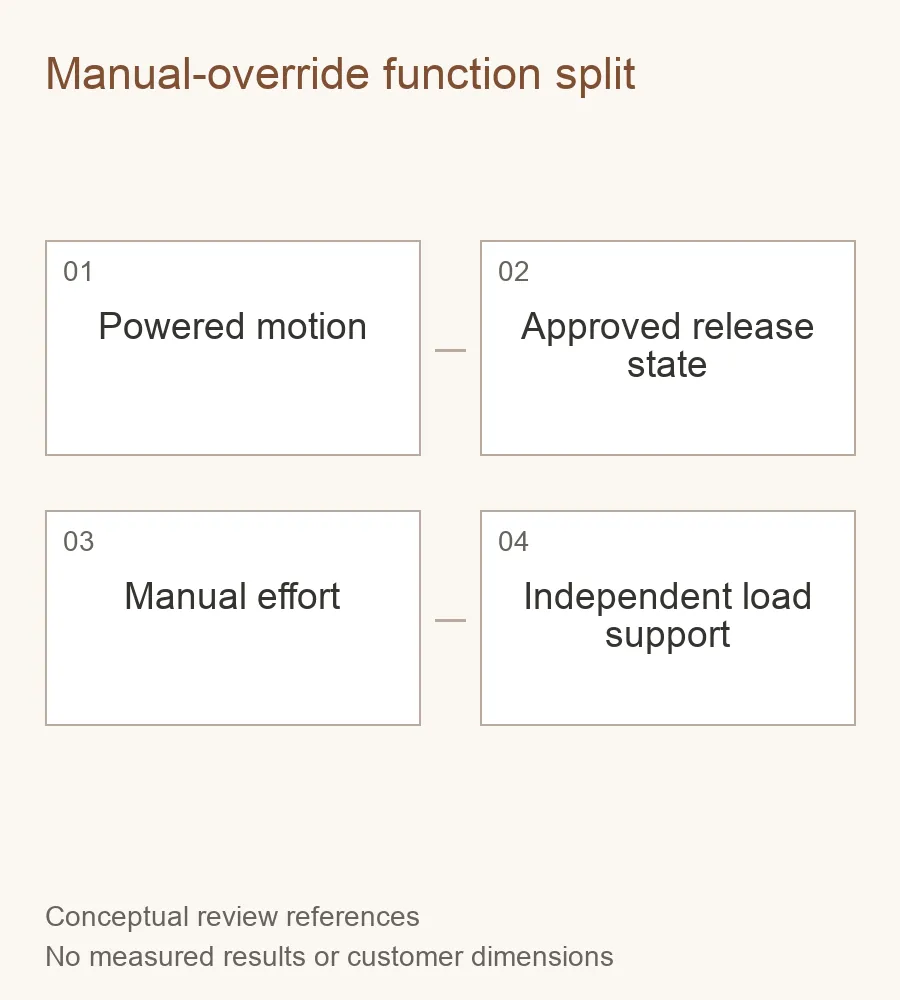
The manual effort requirement needs a defined handle location and speed or motion method. Include any brake or clutch that remains engaged. A spring-only calculation will not describe the effort felt through the actual override transmission.
Review the transition back to powered operation as well. The controller and mechanism need an agreed position relationship; a carriage moved manually may no longer match the drive's stored reference. Returning power should not be treated as proof that position is known.
The engineering handover should name the override states and the component responsible for supporting the load in each one. This is a system review, not a procedure for disconnecting a loaded spring or defeating a drive restraint. Ask the machine designer to define the approved sequence before using prototype effort measurements to accept the override.

For the broader background, read Constant Torque Spring and Friction Hinge Responsibilities.
Explore related spring information or discuss this mechanism with a non-confidential description.