
A new cable boot can change where a connector meets its parking support and where a user pulls the assembly. If the test reference moves with the boot, apparent changes in travel or pull effort may not come from the spring.
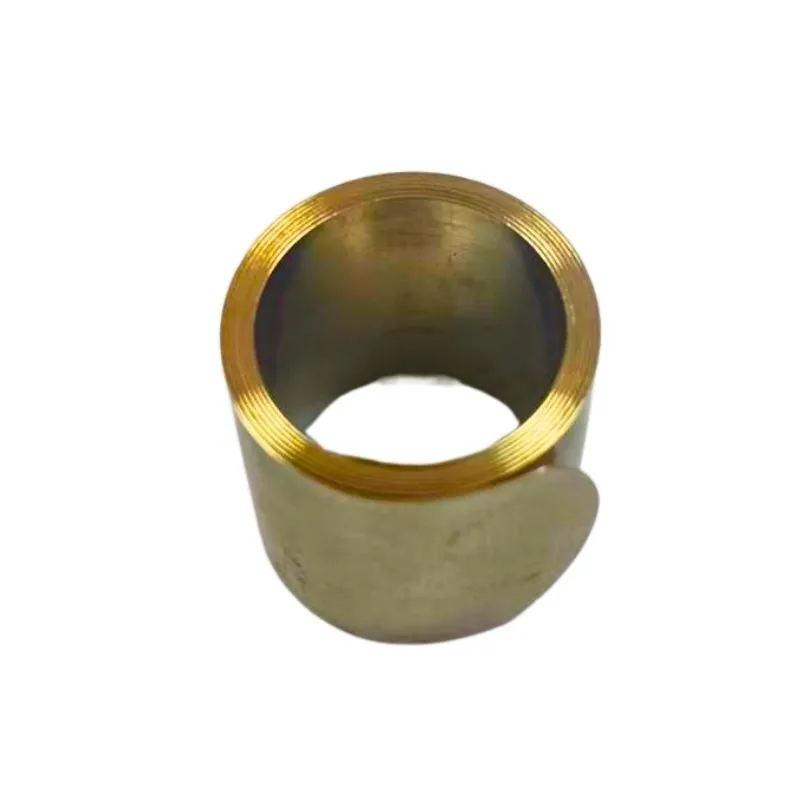
Preserve an independent datum
Choose a reference on the connector or cable assembly that remains meaningful across the revision. Record the old and new boot geometry relative to it. Distinguish the user's gripping point from the point used to measure pull force.
A longer boot may occupy travel that was previously available to the cable. Check the parked position and required reach using the complete revised end assembly, not a bare cable length.
Inspect the flexible transition
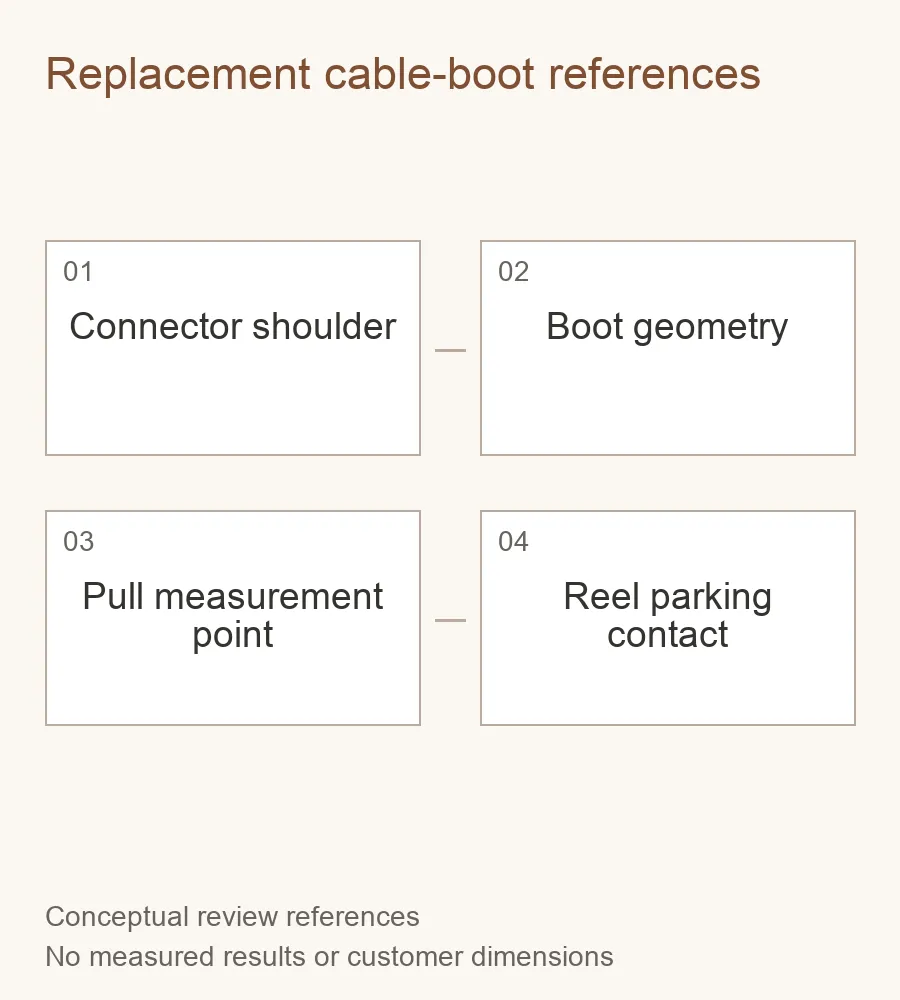
The boot can alter local stiffness and bend behavior near the termination. Review the path as it approaches the reel exit and parking support. A part that fits while straight can contact the housing when pulled sideways.
Compare the same cable positions and directions before and after the revision. Record any changed contact surface or support condition. Do not adjust the spring solely to conceal a boot that is seating in the wrong place.
The approval record should link boot revision, connector datum, usable reach and parking geometry. This keeps a small protective-part change from silently changing the reel's functional references.
For the broader background, read Cable Reel Connector Strain Relief During Full Return.
Explore related spring information or discuss this mechanism with a non-confidential description.