
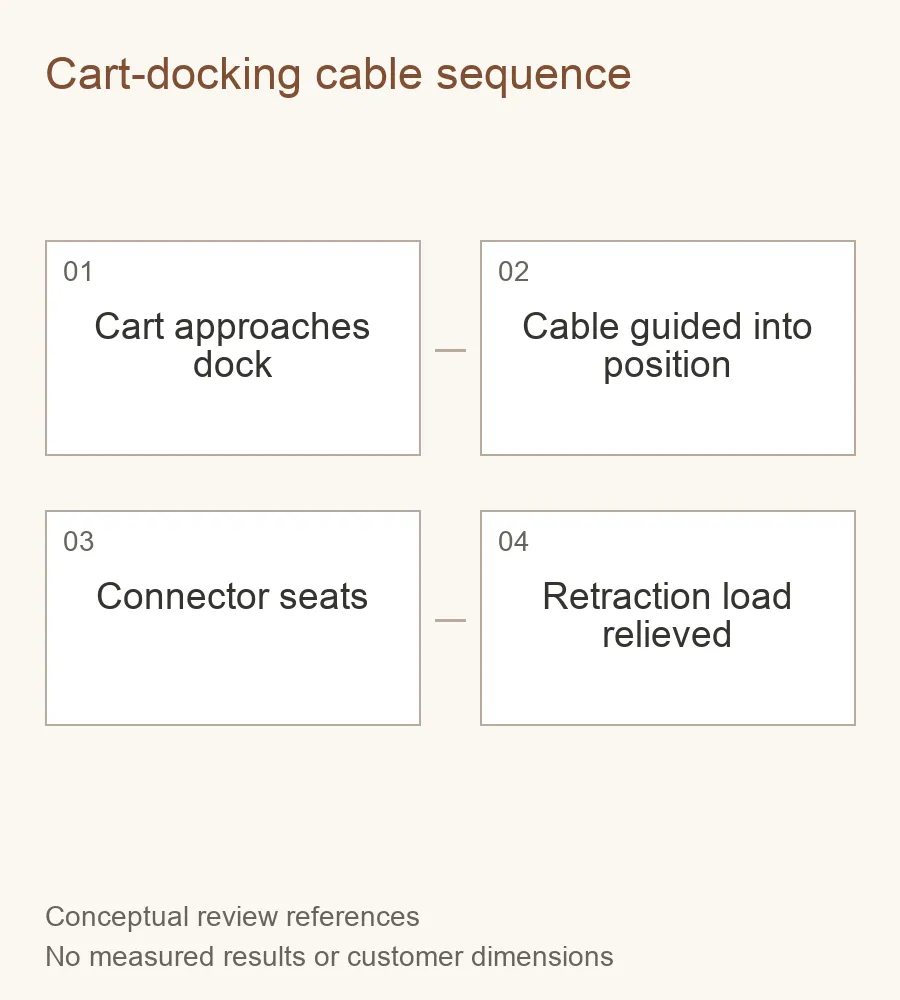
A cart docking interface may ask a retractable cable to manage slack while a connector is aligned and seated. Those functions need a sequence. Cable tension that is useful during travel can oppose the final docking movement or load the connector after seating.
Separate travel from mating
Show the cart route, cable outlet and dock location. Identify where the user or mechanism takes control of connector alignment. The reel should not be assumed to steer a connector into its mating interface.
Record the permitted cart positions and the reach needed before docking. Include any change in cable angle as the cart enters the final approach.
Define the seated condition
State whether the cable remains under tension when the cart is docked and which structure carries that load. A successful electrical connection does not establish acceptable long-term loading at the connector or strain relief.
During an approved evaluation, observe approach, seating, parked retention and withdrawal separately. Keep cable pull measurements tied to these phases rather than averaging them into one docking force.
The mechanical handover should identify reel return, connector mating and cart retention as different responsibilities. Equipment electrical and laboratory requirements remain with their qualified owners. The spring discussion can then focus on the required cable contribution without implying that the complete docking system has been validated.
For the broader background, read Constant Force Springs for Height-Adjustable Medical Carts.
Explore related spring information or discuss this mechanism with a non-confidential description.