
For a high-mounted lid, the most difficult part of opening may be reaching a useful grip rather than overcoming its weight. Spring assistance can reduce effort after engagement while leaving the first or final part of the task awkward.
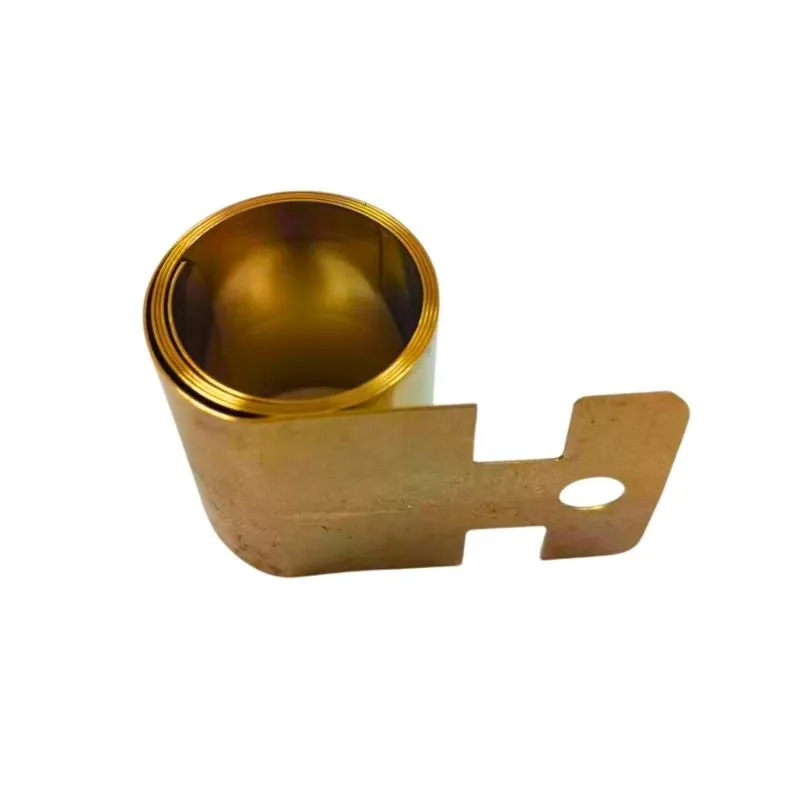
Follow the hand position
Mark the intended grip at closed, intermediate and open positions. Compare those positions with the product's defined user interaction requirements. Do not assume that a handle remains comfortably reachable because the lid itself stays within the machine envelope.
A pull strap or remote handle changes the force path. Its length, routing and attachment then become part of the spring-assisted mechanism rather than an informal accessory.
Review closing as a separate task
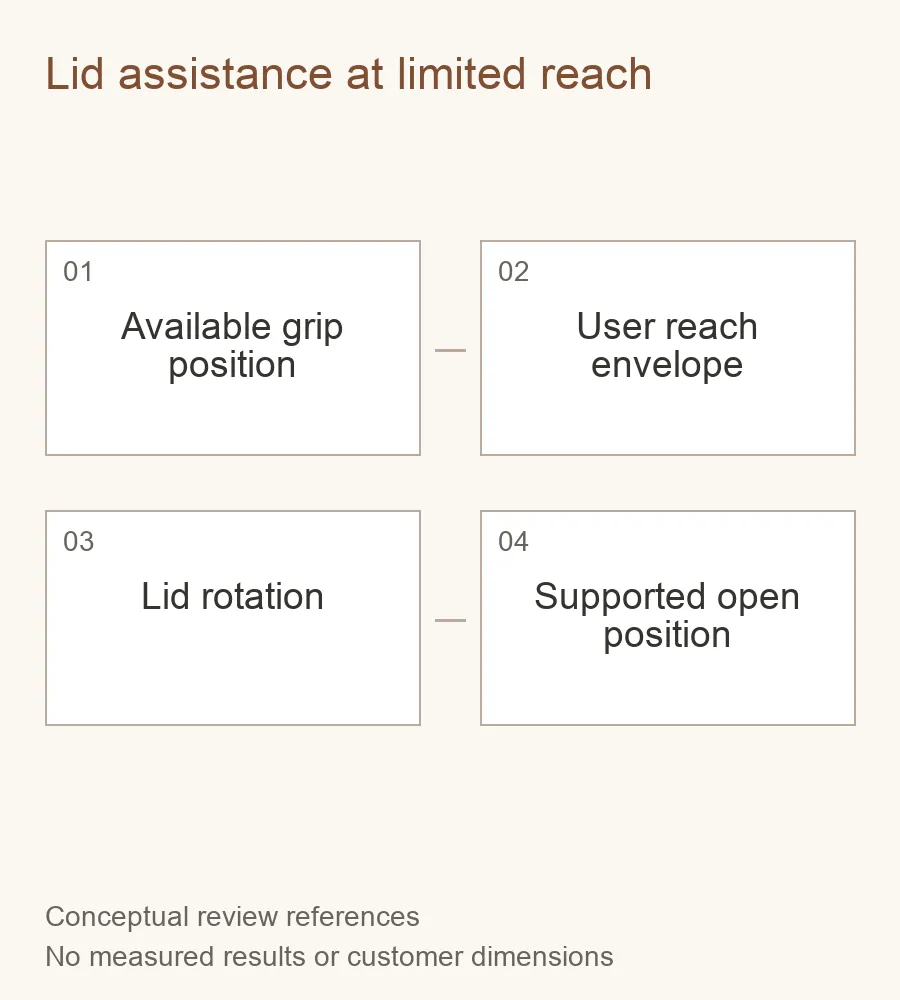
A lid that rises easily may require the user to pull downward from an inconvenient position. Record where the user acts and which direction assistance contributes during closing. More opening assistance can increase the final closing effort.
Keep the hold-open function explicit. The user should not need to stand under a moving lid or reach farther merely to keep it from returning; the product designer must establish the appropriate retention arrangement.
The spring enquiry should describe the grip motion and intended effort range at that grip. This is more informative than lid weight alone and avoids treating a nominal counterbalance as acceptance of the complete user interaction.
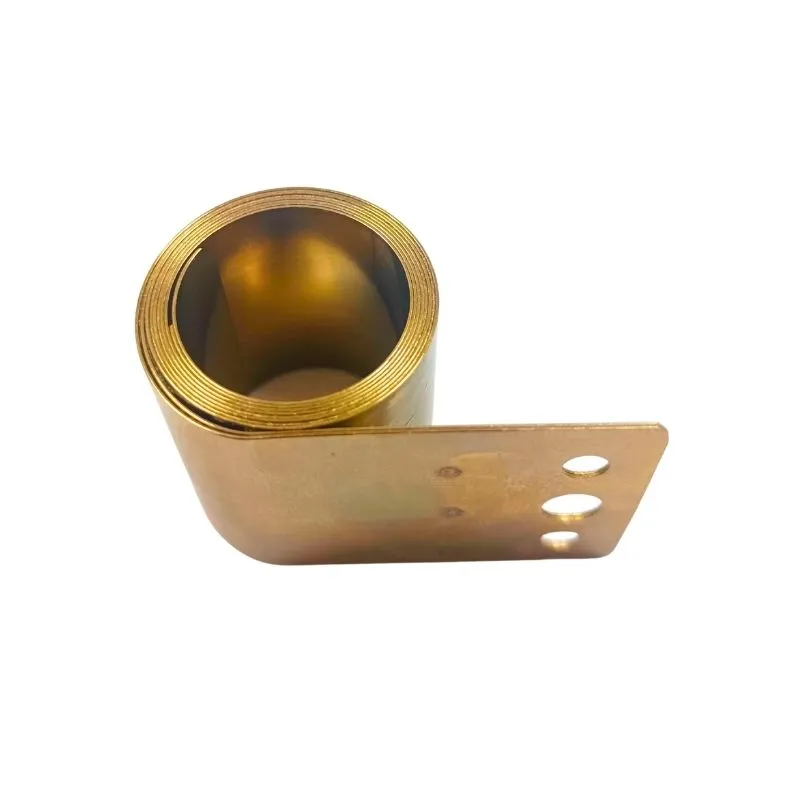
For the broader background, read Constant Force Springs for Overhead Cabinet Lift Doors.
Explore related spring information or discuss this mechanism with a non-confidential description.