
A two-part access panel can change shape while it opens. The mass and orientation of the second section affect the first section through the folding joint, so an equivalent single rigid panel may not describe the required spring contribution.
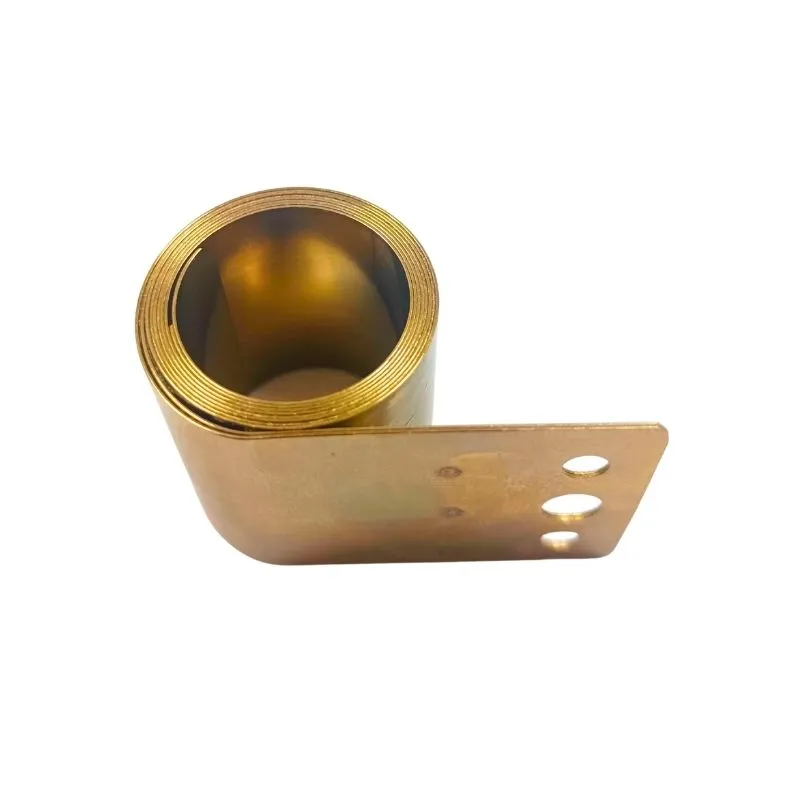
Keep both angles in the sketch
Show the main pivot angle and the fold angle at the decision positions. Identify any link, cable or stop that constrains their relationship. If users can move the two sections independently, state the permitted combinations rather than assuming one fixed sequence.
Plot the spring attachment with the same positions. A contribution that assists one section can oppose another part of the permitted movement.
Inspect the joint region
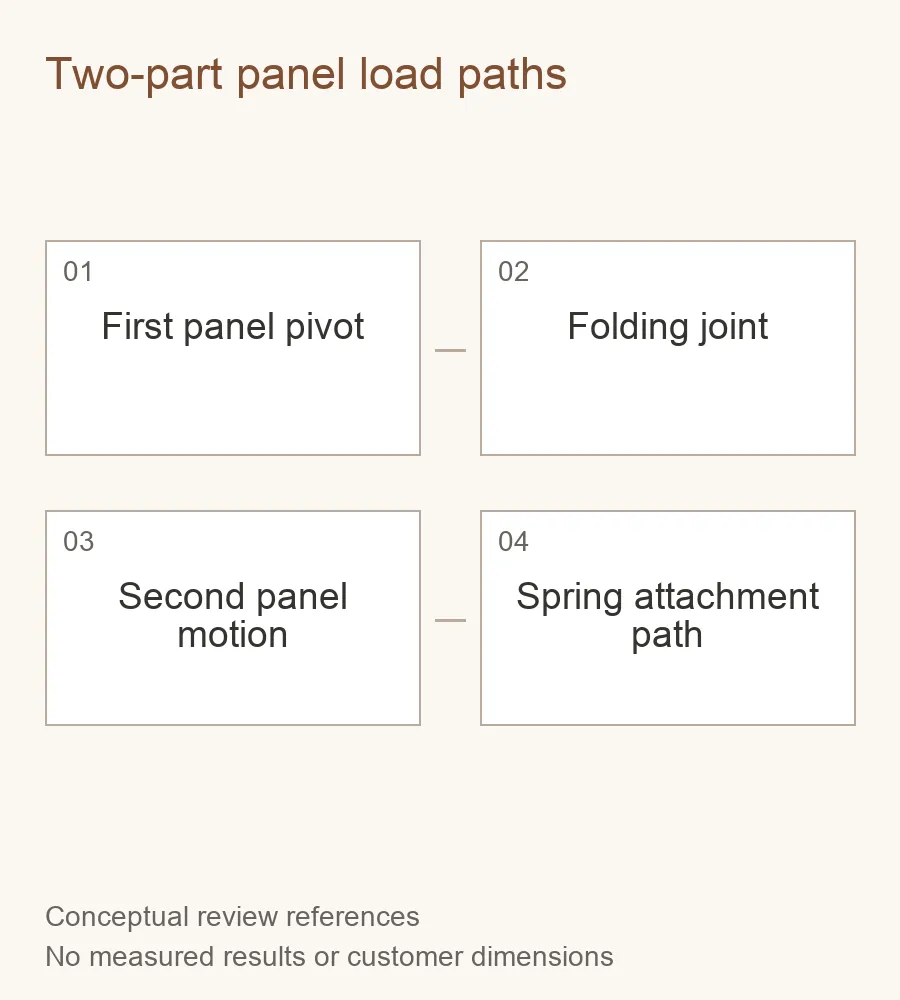
Check the moving envelope of the spring connection, flexible coupling and panel edges around the fold. Clear endpoints do not prove clearance during the intermediate shape change.
The joint also transfers load between sections. Its supporting structure and any retention features need evaluation against the relevant configurations, independent of spring output acceptance.
For an initial enquiry, a short sequence of simplified panel outlines is usually more useful than a closed overall dimension. Include the intended opening and closing order and the states that must be retained. The spring target should follow that defined mechanism, not an imagined rigid substitute.
For the broader background, read Constant Torque Spring Output with a Changing External Lever.
Explore related spring information or discuss this mechanism with a non-confidential description.