
A magnetic parking feature can change the final part of a retractor's movement. The spring drives the approach, while magnetic attraction and the parking geometry influence seating and release. A parked connector's feel is therefore not a spring-only result.
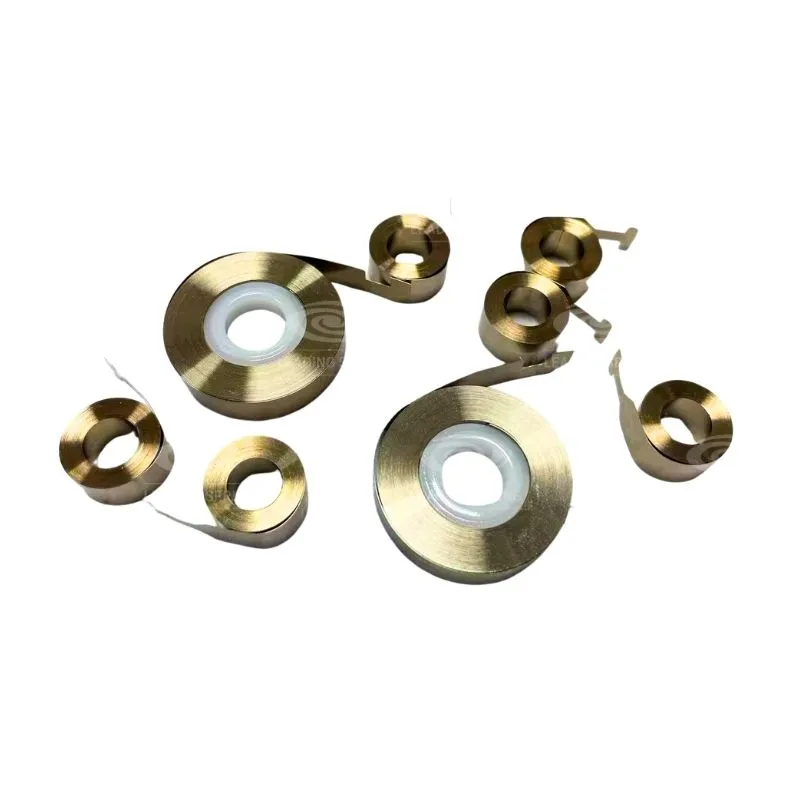
Locate the magnetic contribution
Show the magnet, mating feature and the path of approach. Identify the region in which the parking interaction becomes relevant. Do not infer holding or release behavior from a spring torque value measured away from the dock.
Keep the magnet and mating-part identities in the assembly definition. Changes in their geometry or spacing can alter the parking interaction without any reel change.
Compare approach and withdrawal
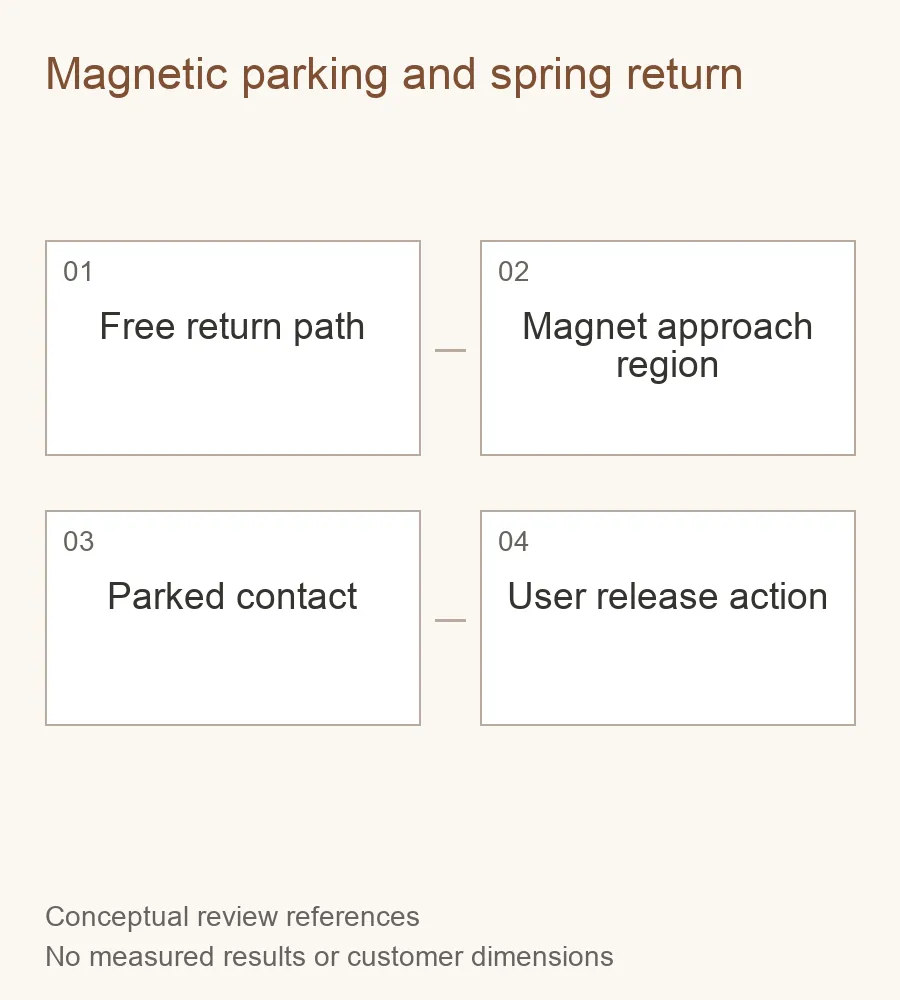
Record how the end arrives, where it contacts and how the user releases it. A configuration that parks securely can still require an unsuitable pull direction or load the cable termination during release.
Check whether the parked feature holds the end independently or only when spring tension remains. That distinction affects what the product can claim about retention.
The acceptance criteria should address return completion, seated condition and release interaction separately. A stronger spring may change arrival while doing little to improve a poor magnetic interface. Keep the parking decision with the complete dock geometry, not with a bare spring specification.
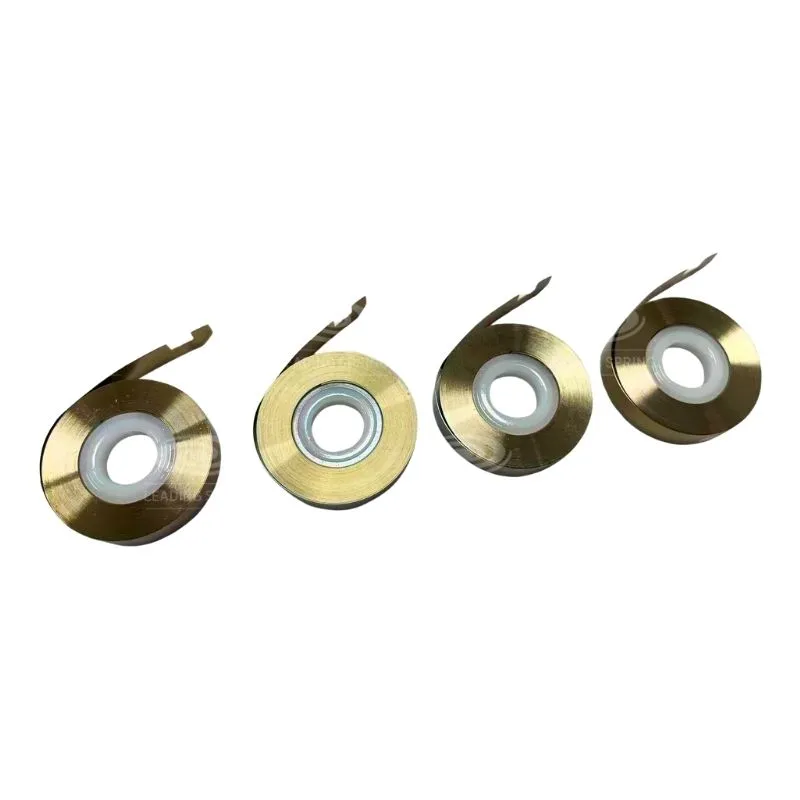
For the broader background, read Cable Reel Return Near the Parked Position.
Explore related spring information or discuss this mechanism with a non-confidential description.