
Placing a cable retractor inside a drawer can save visible space while creating a moving clearance problem. The reel, rail hardware and cable may occupy different envelopes as the drawer opens and closes.

Compare the complete installed positions
Show the reel body, cable outlet, rail members and mounting fasteners at closed, intermediate and extended positions. Include the cable loop's shape, not only the housing outline.
Keep drawer movement and cable payout separate. If a user can extend the cable while the drawer is partly open, that combination belongs in the permitted position set.
Reserve space for service and adjustment
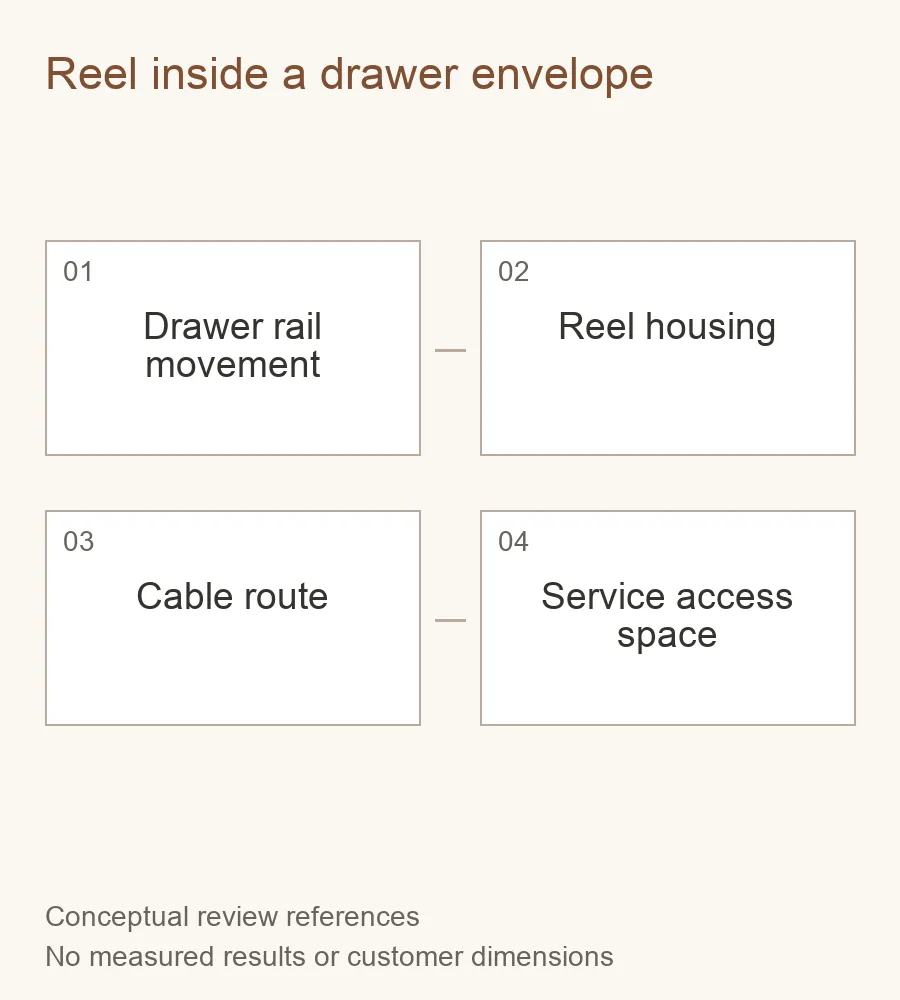
A layout that assembles before the rail is installed may not allow an approved replacement afterward. Identify the removable unit and the path by which it leaves the drawer. Captive connectors and boots can determine that boundary.
Check whether rail adjustment or drawer loading changes cable contact. A local rub can appear only when the drawer is loaded or offset within its permitted adjustment.
For the spring review, provide the cable contribution required at the relevant positions and the reel envelope that remains available. Do not use greater return torque to compensate for interference with a slide member. Clearance, cable condition and return completion all need evidence in the final arrangement.
For the broader background, read Cable Reel Spool Flange Clearance.
Explore related spring information or discuss this mechanism with a non-confidential description.