
A gear train with a neutral or disengaged interval can temporarily separate spring movement from output movement. During that interval, the spring may continue moving without driving the intended load, or it may remain restrained by another component. The design needs to state which behavior is intended.
Map the engagement sequence
Mark the positions where torque transmission begins and ends. Identify the member that selects engagement and whether its position follows the output, a cam or a separate control. A continuous output-angle drawing may hide a discontinuous torque path.
Write the state of the spring shaft while the output is disengaged. If it moves, define how that movement is limited and how its reference is retained. If it must not move, name the element that provides retention.
Review re-engagement as its own event
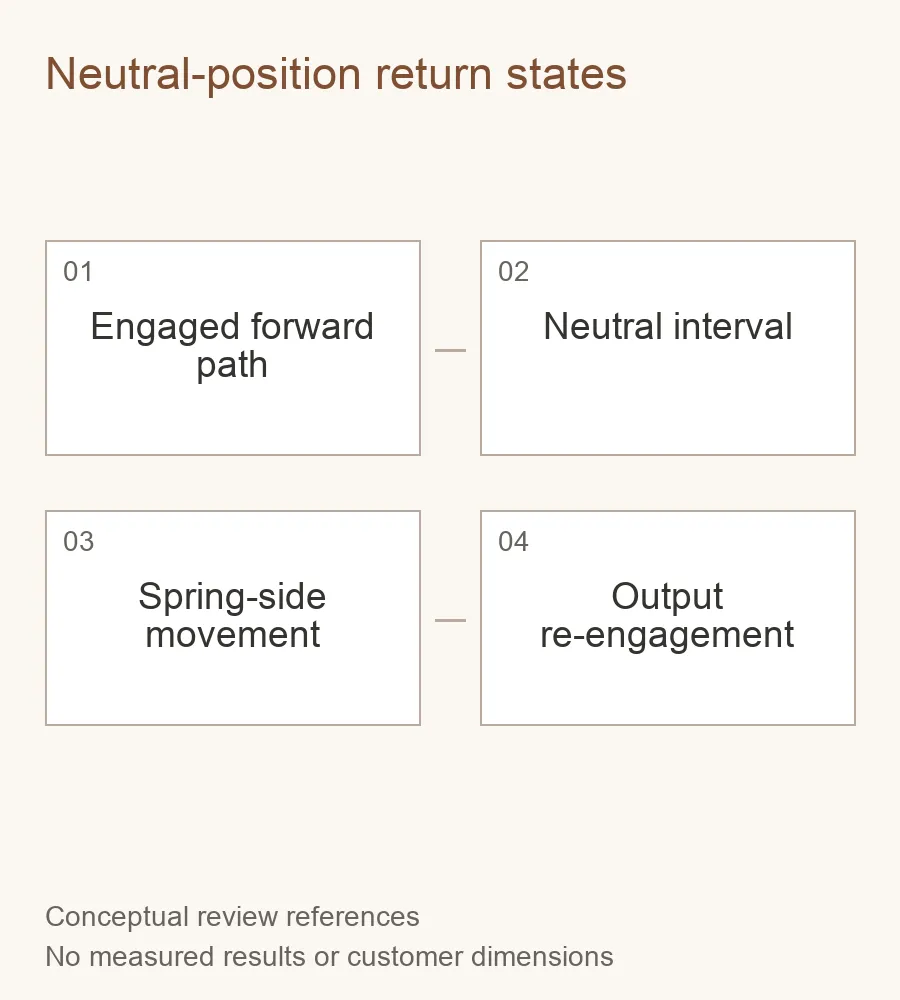
The two sides may reach engagement with different positions or speeds. The mechanism designer must address the resulting contact and arrival behavior. More spring torque is not a general cure for reluctant engagement and may increase the load when contact finally occurs.
Capture both sides of the transmission in the test record. An output-only video can miss motion inside the neutral interval that explains a later impact or lost position.
For supplier discussion, a state sequence is more useful than describing the mechanism as a simple rotary return. The spring's operating interval must be reconciled with the actual engagement path before a torque curve can be accepted for the assembly.
For the broader background, read Power Spring Load Reversal in a Bidirectional Mechanism.
Explore related spring information or discuss this mechanism with a non-confidential description.